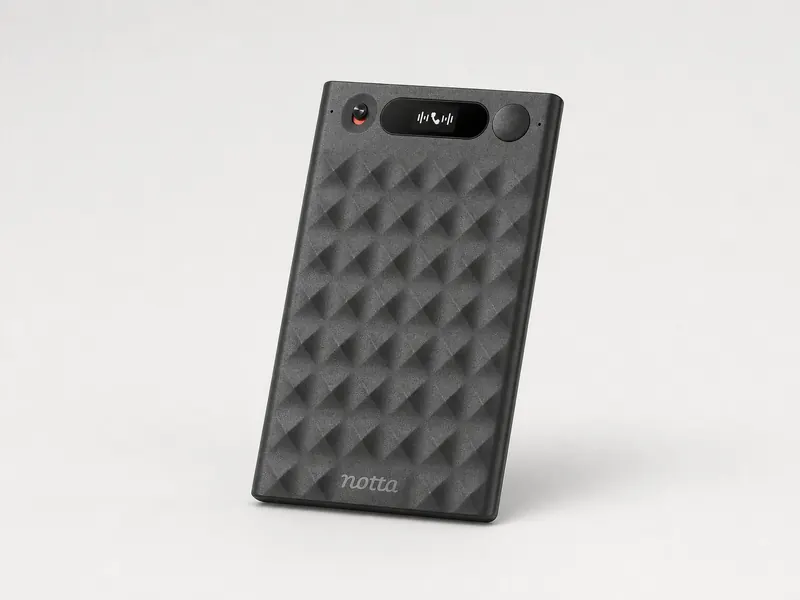
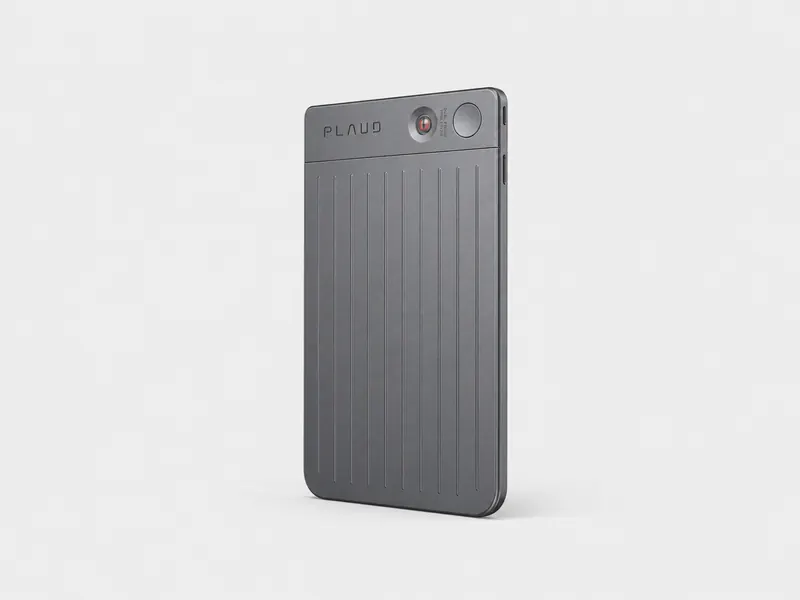
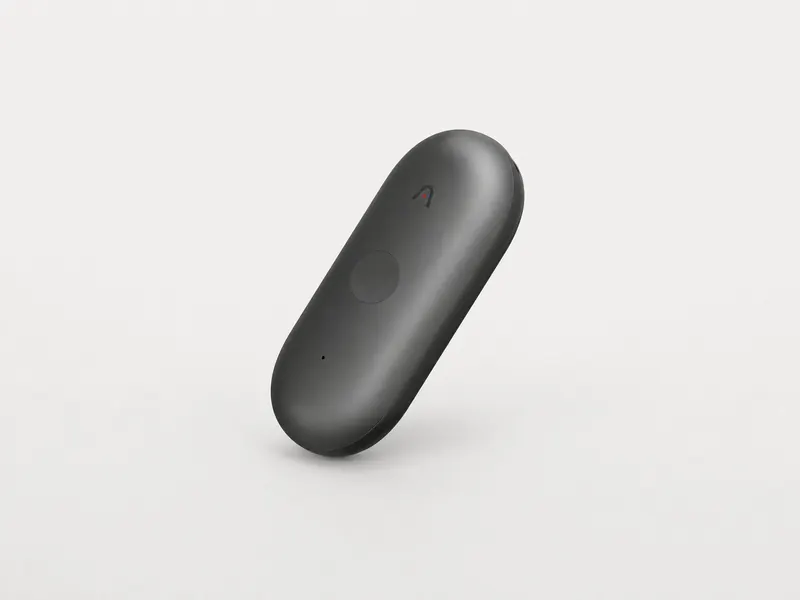
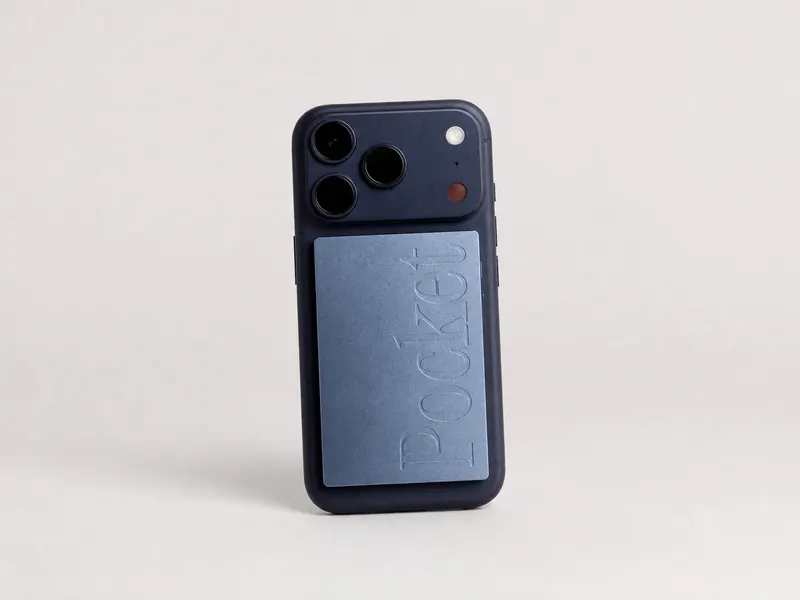
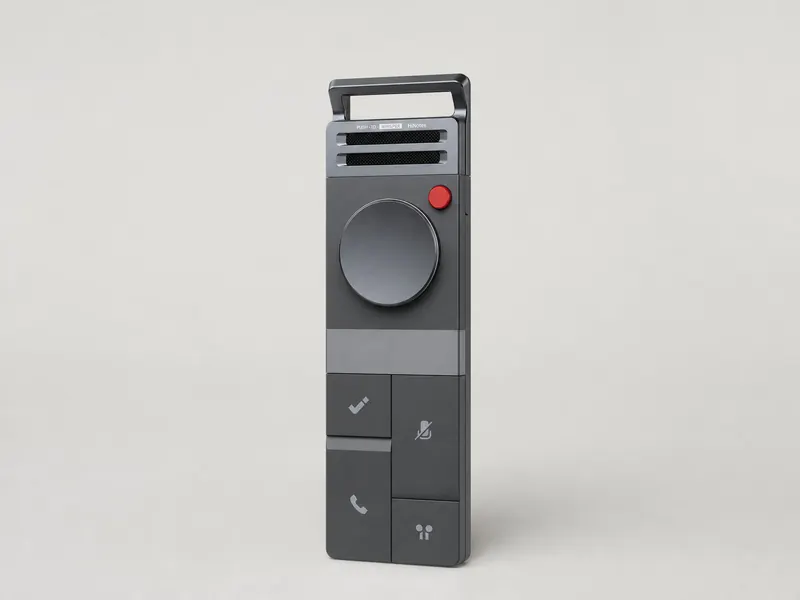
Notta Memo at $149 is the best AI voice recorder of 2026 and the one we would buy first. Plaud Note Pro at $189 is the pick for measured transcription accuracy; Plaud NotePin S at $179 is the wearable pick; Pocket at $139 is the pick with no subscription for core processing; HiDock P1 at $169 is the pick for earphone phone calls. Prices checked 2 October 2026.
01 — Best overall
Notta Memo
8.4/10
Price
$149
Type
Card recorder
Assessment
Hands-on use + supplied test data
Notta Memo is the recorder David Wilson preferred in everyday use, and it has the largest free allowance here. An eligible owner gets 600 transcription minutes a month on the Hardware Plan, against 300 minutes on Plaud's included Starter. It also translates live and records Zoom, Teams, Google Meet and Webex calls from the same Notta account. The August 2026 English tests cover Notta Memo Pro, a different model, so this pick rests on hands-on use and plan value, not a measured accuracy win.
Choose it if: You want the biggest free allowance and the recorder we preferred in use.
Plaud Note Pro had the lowest English word error rate in every scenario tested in August 2026 in Shenzhen meeting rooms: 9.2% in a two-person interview, 17.5% in a six-speaker class and 41.1% in an eight-speaker team meeting. It also advertises up to 50 hours of continuous recording and transcription in 112 languages. It costs $40 more than Notta Memo and includes only 300 free minutes a month on Starter.
Choose it if: You want the lowest measured error rates, the longest advertised battery or 112 transcription languages.
Plaud NotePin S puts recording control on your clothing or wrist, which suits people who record while standing or moving. In the August 2026 English tests it scored close to Plaud Note Pro in a two-person interview, 9.6% against 9.2%, though it fell behind in the six-speaker class at 20.9%. A wearable is less useful when your main task is direct phone-call capture.
Choose it if: You want a wearable recorder you control without touching your phone.
Pocket is the cheapest recorder on this page at $139 and advertises unlimited core processing minutes, so there is no monthly transcription allowance to run out of. It is a MagSafe card recorder, so it lives on the back of your phone. There is no test-centre data for Pocket, so this pick rests on its advertised terms and its price, not on a measured accuracy score.
Choose it if: You want the lowest price and unlimited advertised core processing with no subscription.
HiDock P1 is an earphone call recorder: it captures the call in your ear, which is the most direct phone-call capture of any pick here. It includes core HiNotes transcription and summaries. There is no test-centre data for HiDock P1, so this pick rests on its form factor and included features, not a measured accuracy score.
Choose it if: Your recordings are mostly earphone phone calls.
The picks rest on three kinds of evidence. First, David Wilson's hands-on use of Notta Memo, which anchors the overall pick. Second, transcription and battery figures from tests run in Shenzhen meeting rooms in August 2026; we quote them by scenario and conditions, and they are not independent Testbench Lab measurements. Third, manufacturer pages for prices, plans and advertised specs, checked 2 October 2026, plus published roundups from WIRED, TechCrunch, Jasper Tech and TechGearLab. Scores are draft editorial ratings out of 10. The English test results cover Notta Memo Pro, Plaud Note Pro and Plaud NotePin S; Pocket and HiDock P1 have no test-centre data, so their picks rest on advertised terms and hands-on judgement where recorded.
Which AI voice recorder is best for meetings?
Notta Memo is the meeting recorder we would buy for most people. That is a hands-on judgement, backed by its plan value: 600 free transcription minutes a month for an eligible owner, against 300 minutes on Plaud's included Starter. Ten hours of free transcription a month covers a light-to-medium meeting load before any paid plan.
If measured accuracy matters more than price, Plaud Note Pro is the stronger meeting recorder on the evidence we have. In August 2026 English transcription tests in Shenzhen meeting rooms, Plaud Note Pro had the lowest word error rate in every scenario tested:
Scenario (English, WER, lower is better)
Plaud Note Pro
Plaud NotePin S
Notta Memo Pro
Speech, 1 speaker
15.3%
15.6%
19.5%
Interview, 2 speakers
9.2%
9.6%
10.4%
Sales pitch, 4 speakers
14.0%
—
15.9%
Class, 6 speakers
17.5%
20.9%
20.4%
Team meeting, 8 speakers
41.1%
53.2%
50.9%
Those are single recorded sessions per condition, not repeated trials, and the Notta figures are for Notta Memo Pro, a different model from the $149 Notta Memo. The tests are not independent Testbench Lab measurements. The sales-pitch scenario has no NotePin S result, so that row compares two devices only.
Note the pattern in the table: every recorder gets worse as speakers are added. In an eight-speaker team meeting, the best result was a 41.1% word error rate, which means roughly two words in five were wrong. In a two-person interview, the best result was 9.2%, or roughly one word in eleven. For a buyer, that means the gap between recorders is small in interviews and large in group meetings, and no recorder on this page is reliable enough in an eight-speaker meeting to skip checking the audio.
For Japanese meetings, the same tests show a different picture. In a six-speaker consultation, Notta Memo Pro had a 29.3% character error rate against 46.0% for Plaud Note Pro. In an eight-speaker team meeting, Notta Memo Pro scored 36.7% against 39.0% for Plaud Note Pro. The test summary notes that Memo Pro's overall Japanese advantage comes from the 6- and 8-speaker meetings, and that some competitors perform better at 1–4 speakers. If your meetings are in Japanese, read the notta memo review before choosing.
Place any recorder where the whole group can be heard, not next to one speaker, and check names and figures against the audio before you act on a summary.
How accurate are AI voice recorders?
AI voice recorders are good but not perfect, and accuracy falls sharply as speakers are added. The August 2026 tests show error rates from 9.2% in a two-person interview to 41.1% in an eight-speaker meeting, on the best device in each case.
No manufacturer's accuracy percentage should be taken as a comparison on its own. Notta advertises up to 98.86% accuracy in 58 languages; Plaud does not publish a word-error rate next to it. Two vendor percentages taken from different audio are not a comparison. The August 2026 test data is the only like-for-like accuracy evidence we have, and it covers three models: Plaud Note Pro, Plaud NotePin S and Notta Memo Pro.
The test conditions matter when you read those numbers. The English scenarios were run in person in Shenzhen meeting rooms: a medium meeting room for one speaker, a small meeting room for the two-person interview, a medium room for the four-speaker sales pitch, and an open meeting room or training area for the six-speaker class and eight-speaker team meeting. English uses word error rate; Japanese uses character error rate. The two are not comparable, so keep the languages separate. Each result is a single recorded session per condition, and the workbook still lists details to confirm, such as transcript normalisation and app and engine versions.
Published roundups add context but not numbers. WIRED's 6 August 2026 roundup of about 12 devices judged accuracy, insights, speed and value, using the same prerecorded presentation as a control, but published no error rates. TechGearLab's May 2025 lab test bought 11 recorders and ran their batteries down side by side, but included only one AI recorder, the Plaud Note, and tested no AI transcription accuracy. Jasper Tech's March 2026 video names Plaud Note Pro as its top pick and Pocket as runner-up, with no quantified figures; we have seen only the snippet, so treat that as a signal, not a measurement.
The practical rule: expect clean transcripts from one or two speakers near the recorder, and expect to correct names, figures and technical terms in group meetings. A smooth AI summary can still change a number.
Which AI voice recorder is best for phone calls?
HiDock P1 is the pick for earphone phone calls, and Notta Memo is the pick for speakerphone calls. HiDock P1 records the call in your ear at $169, with core HiNotes transcription and summaries included. Notta Memo uses a physical switch and a MagSafe leather case on the back of the phone, with a bone-conduction microphone that picks up the call from the phone's vibration. That is the call workflow David Wilson would use.
Plaud Note Pro switches between calls and in-person recording automatically, which Plaud calls smart dual-mode. Automatic switching removes the manual step but not the placement step: the recorder still has to be on the phone. A wearable like Plaud NotePin S is less useful for direct phone-call capture, because it is designed to be worn rather than mounted.
Notta Memo
Plaud Note Pro
HiDock P1
Call capture
Bone-conduction mic from phone vibration
Voice pickup unit, recorder on the phone
In-ear recording
Control
Physical switch, set before the call
Automatic dual-mode
Earphone-based
Included processing
600 min/month, if eligible
300 min/month Starter
Core HiNotes transcription
The August 2026 tests included real phone calls in Japanese only, and only for Notta Memo 2.0 and Notta Memo 1.0: 22.7% and 32.8% character error rates in an interview call, and 16.2% and 20.0% in a sales-pitch call. There is no English phone-call test data, so treat call accuracy as unmeasured for the English picks. The Japanese phone-call results at least show a direction: the newer Notta Memo 2.0 beat the 1.0 on both call scenarios.
Recording a call can require consent. Check one party consent states before you rely on any of these devices.
Which AI voice recorder has the best battery life?
Plaud Note Pro has the longest advertised recording time of the picks: up to 50 hours of continuous recording. That is a manufacturer claim, not a timed rundown. Notta Memo advertises up to 30 hours, and its quick guide caps a single recording session at 5 hours.
The August 2026 firmware tests give measured figures, but only for Notta Memo Pro, a different model from the $149 Notta Memo. With firmware 2.0.1.0, Notta Memo Pro's tested offline recording time is 43 hours, against the 50 hours listed for firmware 1.0.5.5. With Bluetooth connected, the tested figure is 37 hours against a listed 45. The same tests measured a recommended maximum pickup distance of 8 m on firmware 2.0.1.0, against 5 m listed for the older firmware.
Notta Memo Pro metric
Firmware 1.0.5.5 (listed)
Firmware 2.0.1.0 (tested, August 2026)
Recording, offline
50 h
43 h
Recording, Bluetooth connected
45 h
37 h
Standby, offline
45 days
—
Standby, Bluetooth connected
30 days
—
Pickup distance
5 m
8 m
Full charging time
90 min
—
For a buyer, the lesson is that firmware updates can change real battery life by hours in either direction, and advertised maxima are measured under conditions you may not match. If a long recording day matters more than the $40 price gap, Plaud Note Pro's advertised 50 hours is the number to buy on, with the caveat that we have not timed it. There is no test-centre battery data for Pocket, HiDock P1 or Plaud NotePin S, so their endurance figures are advertised only.
Do you need a subscription for an AI voice recorder?
No. Every pick here records and transcribes inside an included allowance or included core processing, and a paid plan is for heavier use, not for pressing record.
Recorder
Price
Included processing
Paid plan
Notta Memo
$149
600 min/month Hardware Plan, if eligible
Notta Pro $97.99/year, 1,800 min/month
Plaud Note Pro
$189
300 min/month Starter
Plaud Pro $99.99/year, 1,200 min/month
Plaud NotePin S
$179
Starter allowance
Plaud Pro $99.99/year
Pocket
$139
Unlimited core processing, advertised
Membership for advanced features
HiDock P1
$169
Core HiNotes transcription and summaries
HiNotes paid tier
US prices checked 2 October 2026. Notta's Hardware Plan has eligibility rules: a free-workspace owner qualifies, a Pro-workspace owner gets the 600 minutes added, but a member of someone else's workspace, a user with no workspace, or the owner of a paid workspace other than Pro does not. Hardware Plan translation is also capped, at 4 bilingual uses and 2 monolingual real-time translation uses a month, plus 100 AI summaries a month. Paid-plan minutes are that plan's own allowance, not added on top of the free minutes.
Pocket's unlimited minutes are an advertised term, not a tested limit, and advanced features sit behind a membership. HiDock's included tier covers core HiNotes transcription and summaries. Read the included-feature terms alongside the hardware description before you commit to an ecosystem.
Card, wearable or earphone: which form factor should you buy?
Buy the form factor that matches where your microphone needs to sit. A card recorder like Notta Memo, Plaud Note Pro or Pocket suits scheduled meetings and calls, because it sits flat on a table or on the back of a phone. A wearable like Plaud NotePin S suits people who record while standing, walking or presenting. An earphone recorder like HiDock P1 suits call-heavy weeks.
The August 2026 tests give one measured comparison between a card and a wearable. Plaud NotePin S was close to Plaud Note Pro in a two-person interview, 9.6% against 9.2%, and in one-speaker speech, 15.6% against 15.3%. It fell behind in the six-speaker class, 20.9% against 17.5%, and further behind in the eight-speaker team meeting, 53.2% against 41.1%. On that evidence, a wearable costs you little in small groups and more in large ones.
WIRED's 6 August 2026 roundup named the Soundcore Work its Best Wearable, which suggests the wearable category is competitive beyond our shortlist, but we have no test-centre data for it. TechCrunch's March 2026 roundup lists wearables and pendants alongside card recorders with maker-claimed numbers only.
Do not treat form factor as a cosmetic choice. It decides where the microphone sits relative to the speakers, and the error-rate tables above show how much distance and speaker count matter. A wearable on a lapel is closer to your own voice and further from the room; a card in the middle of the table hears everyone a little worse.
How to choose an AI voice recorder
Start with what you record, then estimate your monthly transcription time. Five hours of included transcription is enough for occasional interviews and too little for a busy meeting calendar. At 600 minutes a month, Notta Memo's eligible Hardware Plan covers roughly twelve 50-minute meetings; at 300 minutes, Plaud's Starter covers about six.
Form factor comes next, using the card, wearable and earphone guidance above. Then check the ecosystem. Notta's account also records Zoom, Teams, Google Meet and Webex calls and translates live within the Hardware Plan's caps. Plaud includes Zapier on every plan, including the free Starter. Pocket and HiDock bundle their own processing. Check export, retention and attachment before committing to an ecosystem, because moving a library of transcripts later costs more than any $40 hardware gap.
Language matters too. Plaud Note Pro transcribes in 112 languages against Notta's 58, per each manufacturer's pages. But the August 2026 Japanese tests show Notta Memo Pro ahead in the largest-group scenarios, so language count and language performance are different questions. If you record in Japanese, weigh the character-error-rate table above, not the advertised language count.
Notta Memo at $149 is our best AI voice recorder of 2026. It is the recorder David Wilson preferred in everyday use, it has the largest free allowance at 600 minutes a month for an eligible owner, and it costs $40 less than Plaud Note Pro. Plaud Note Pro is the accuracy pick: it had the lowest English word error rate in every scenario tested in August 2026.
Are AI voice recorders legal?
Yes, the devices are legal to buy and own, but recording rules depend on consent, location and context. In the US, some states require only one party's consent to record a conversation and others require all parties. Check one party consent states before you rely on any recorder.
Is there an AI voice recorder with no subscription?
Yes. Pocket at $139 advertises unlimited core processing with no monthly transcription allowance, and HiDock P1 at $169 includes core HiNotes transcription and summaries. Notta Memo and both Plaud picks also transcribe inside a free monthly allowance without a paid plan.
What is the best AI voice recorder for meetings?
Notta Memo is our preferred general meeting recorder, with 600 free minutes a month for an eligible owner. On measured accuracy, Plaud Note Pro led the August 2026 tests in every English scenario, including a 17.5% word error rate in a six-speaker class against 20.4% for Notta Memo Pro. Place any recorder where the group can be heard, not next to one speaker.
Are AI voice recorders any good?
Yes, for making audio searchable and easy to revisit, with limits. In August 2026 tests, error rates ran from 9.2% in a two-person interview to 41.1% in an eight-speaker meeting on the best device. Check significant details against the recording before relying on an AI summary.
[1]ASR and firmware test results for Notta devices — English and Japanese transcription error rates and battery/pickup figures, Shenzhen meeting rooms, 18 and 28 August 2026. Single recorded sessions per condition; not independent Testbench Lab measurements.
[9]TechCrunch: AI notetaking devices roundup — 20 March 2026, updated 14 August 2026. Overview of 10 devices with maker-claimed numbers; no hands-on method stated. Opened 1 October 2026.
[11]TechGearLab: Best Digital Voice Recorders — 16 May 2025. Bought 11 recorders, side-by-side battery and audio testing; Plaud Note 74/100, audio 5/10. Only one AI recorder. Opened 1 October 2026.