Our Plaud alternatives, assessed on August 2026 transcription tests, manufacturer specs, third-party reviews and David Wilson's recorded hands-on preference for Notta Memo.
Notta Memo at $149 is the Plaud alternative we would buy first. It is the recorder David Wilson preferred in hands-on use, it costs $40 less than the $189 Plaud Note Pro, and an eligible owner gets 600 transcription minutes a month on Notta's included Hardware Plan. The other picks here serve different needs: Pocket at $139 if you want a cheaper MagSafe card with a different processing model, HiDock P1 at $169 if your calls go through a headset, and Anker Soundcore Work at $159 if you want a compact wearable.
01 — Best overall
Notta Memo
8.4/10
Price
$149
Type
Card recorder
Assessment
Hands-on use + supplied test data
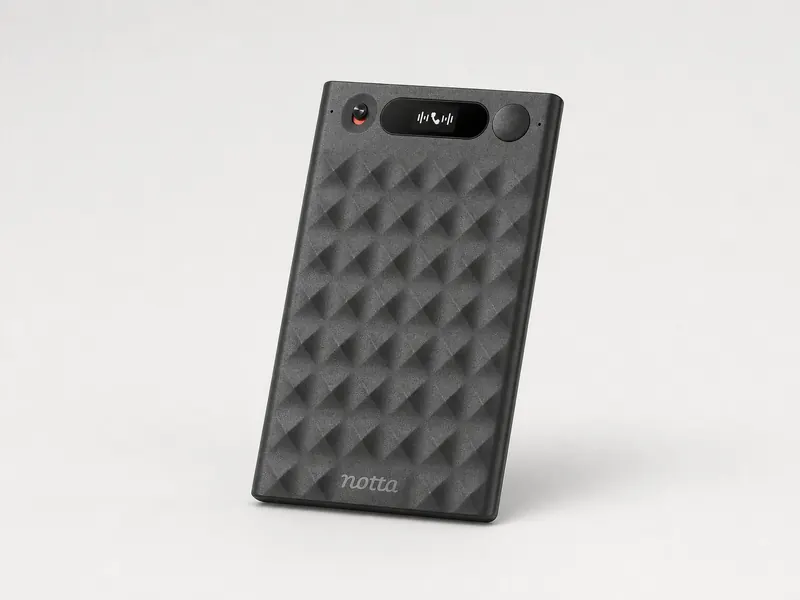
Notta Memo is the closest substitute for a Plaud card recorder and the one David Wilson preferred in hands-on use. It has a physical call/meeting switch, a bone-conduction mic for phone calls in the included MagSafe leather case, and it feeds the same Notta account that can send a bot into Zoom, Teams, Google Meet and Webex calls. An eligible owner gets 600 transcription minutes a month on the included Hardware Plan, against 300 minutes on Plaud's included Starter.
Choose it if: You want the lower price, more included minutes and the Notta software ecosystem behind the recorder.
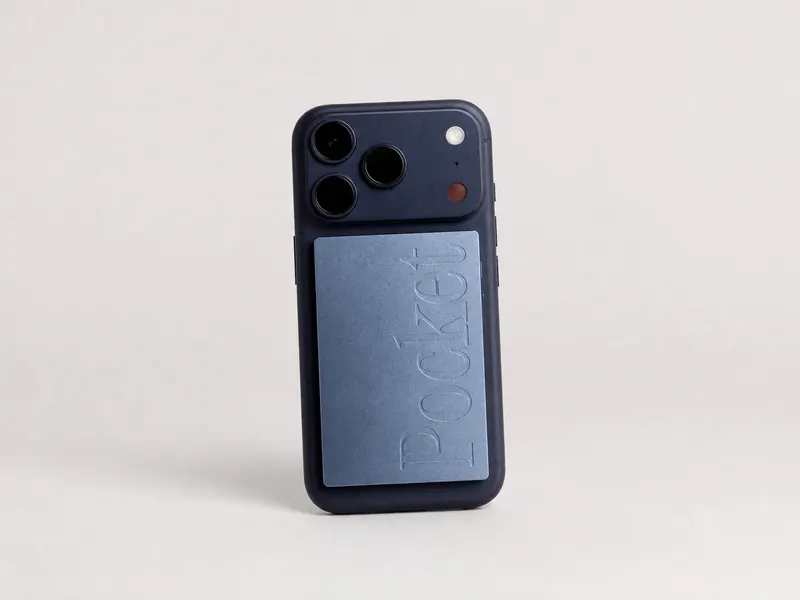
Pocket is the cheapest card recorder on this page at $139 and the one to look at if Plaud's subscription model is what you are leaving. Pocket is a MagSafe card recorder with its own note service, and Market Correct's June 2026 roundup put its year-one cost at about $129 against about $289 for Plaud Note Pro with the Pro plan. That roundup earned commission on Pocket, so treat its framing with care. Confirm which features stay available without the paid tier before buying; a trial banner and a lifetime-core claim describe different parts of the offer.
Choose it if: You want the lowest hardware price and a processing model that is not Plaud's.
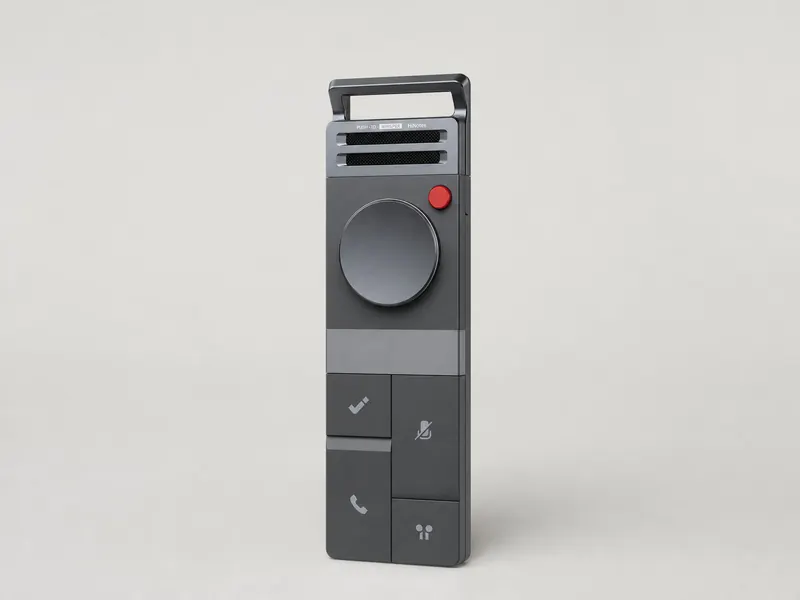
HiDock P1 is the pick when your calls go through a headset rather than a phone pressed to your ear. It is an earphone call recorder with included HiNotes core features, which matters if you record often and do not want a second subscription for the basics. We have no test-centre transcription data for HiDock P1, so this pick rests on its format and its included membership, not on a measured accuracy figure.
Choose it if: You take calls on a headset and want the recorder in that headset.
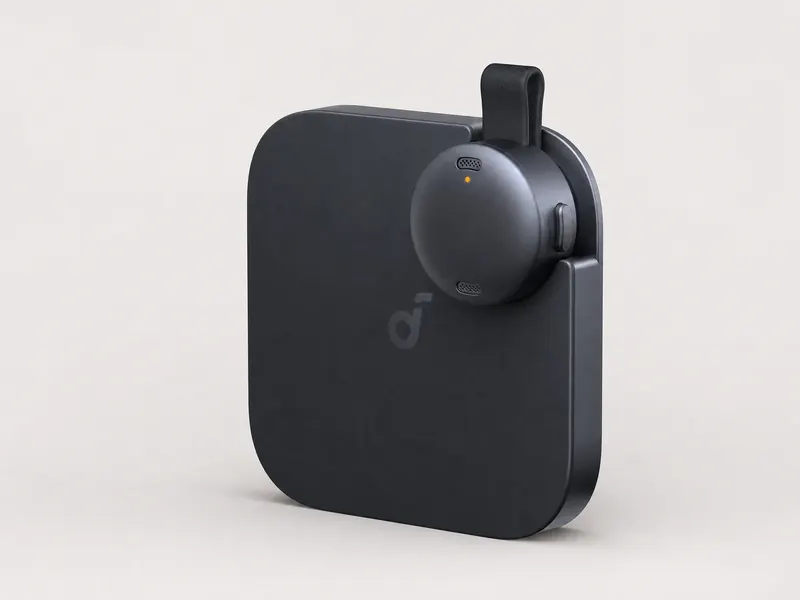
Soundcore Work is the pick if you want to wear the recorder rather than stick it to a phone. In August 2026 Japanese transcription tests in Shenzhen meeting rooms, the Anker AI Recorder — the China-market version of the same family — had a 7.9% character error rate in a two-person interview (C07), better than Notta Memo Pro's 11.2% in the same condition. But it fell apart in bigger groups: 64.0% in a six-person consultation (C10) against 29.3% for Notta Memo Pro. A wearable format is not automatically a substitute for card-style phone-call recording.
Choose it if: You want a small wearable recorder and your meetings are small.
These picks are researched, not a fresh round of hands-on testing. They rest on four things: David Wilson's recorded hands-on preference for Notta Memo; transcription and battery figures from tests run in Shenzhen meeting rooms in August 2026; manufacturer pages for prices, plans and advertised specs; and the four independent third-party sources listed below, found on 1 October 2026. Where a product has no test-centre data — Pocket and HiDock P1 — we say so rather than filling the gap. Scores are draft editorial ratings out of 10 for David Wilson to confirm. US prices were checked on 2 October 2026 without discount codes; re-check each price on the day you buy. We did not find a single major editorial outlet with a 'best Plaud alternatives' roundup — nearly every ranking page in search is written by a competitor such as UMEVO or eesel — so this page leans on primary sources and named tests instead.
Our preferred alternative: Notta Memo
Notta Memo at $149 is the Plaud alternative we would buy first. It is the recorder David Wilson preferred in hands-on use, and it is the closest like-for-like substitute for a Plaud card: same card format, same MagSafe phone-mount idea, same calls-and-meetings workflow, at $40 less than the $189 Plaud Note Pro.
The workflow differs in one useful way. Plaud Note Pro switches between call and meeting modes automatically — Plaud calls that smart dual-mode. Notta Memo uses a physical switch: slide it to call mode, seat the recorder in the included leather MagSafe case on the back of the phone, and the bone-conduction microphone captures the call from the phone's vibration. The other position is in-person meeting mode. Automatic switching removes a manual step; a physical switch means the recorder never guesses wrong about what it is hearing. That is a hands-on preference, not a measured call-quality score against Plaud Note Pro.
The ownership economics favour Notta Memo before any paid plan. An eligible owner gets 600 transcription minutes a month on the included Hardware Plan — 10 hours — against 300 minutes a month on Plaud's included Starter. Eligibility has rules worth reading before you buy: the Hardware Plan is only for an eligible account with the recorder bound. A free-workspace owner qualifies, and a Pro-workspace owner gets the 600 minutes added. A member of someone else's workspace, a user with no workspace, or the owner of a paid workspace other than Pro does not. If you would be the member of a shared workspace, check your eligibility first.
Notta Memo also does two things Plaud does not. First, translation: real-time translation and bilingual transcription and translation in the Notta app, capped on the Hardware Plan at 4 bilingual uses and 2 monolingual real-time translation uses a month, plus 100 AI summaries a month. Plaud's help centre says Plaud does not currently support translation between languages, and that re-transcribing in another language is a workaround, not true translation. Second, meeting bots: the same Notta account can send Notta Bot into Zoom, Microsoft Teams, Google Meet and Webex calls, and can auto-join scheduled meetings from Google or Outlook Calendar, on all Notta plans. Plaud's answer, Plaud Desktop, records from your computer without a bot — so that computer has to be in the meeting.
On measured transcription accuracy, we can quote one comparison, with a clear caveat about models. In August 2026 English transcription tests in Shenzhen meeting rooms, Notta Memo Pro — a different, higher model than the $149 Notta Memo — had a 10.4% word error rate in a two-person interview in a small meeting room (condition C02), against 9.2% for Plaud Note Pro in the same condition. Plaud Note Pro had the lower English error rate in every scenario tested:
English scenario (WER, lower is better)
Notta Memo Pro
Plaud Note Pro
C01 Speech, 1 speaker, medium meeting room
19.5%
15.3%
C02 Interview, 2 speakers, small meeting room
10.4%
9.2%
C03 Sales pitch, 4 speakers, medium meeting room
15.9%
14.0%
C04 Class, 6 speakers, open meeting room
20.4%
17.5%
C05 Team meeting, 8 speakers, open meeting room
50.9%
41.1%
Those are single recorded sessions per condition, not repeated trials, and the $149 Notta Memo's own English accuracy was not measured. For a buyer, the pattern matters more than any single number: error rates climb for every product as speaker count rises, and in an eight-person team meeting even the best device in the test lost more than four words in ten. No recorder on this page is a substitute for checking names and figures against the audio.
In Japanese tests, Notta Memo 2.0 had an 11.9% character error rate in a two-person interview at 6 m in the Yange meeting room (C12), against 15.7% for the Anker AI Recorder and 10.3% for Notta Memo Pro. Notta Memo 1.0 scored 13.2% in the same condition. Which of those models the $149 listing is still needs confirming, so treat the Japanese figures as family-level evidence, not a score for the device in the box.
Skip Notta Memo if you need more than its 58 transcription languages (Plaud Note Pro lists 112), or if Plaud Note Pro's advertised 50-hour recording time matters more than the $40. The full device write-up is the notta memo review, and the head-to-head is Notta Memo vs Plaud Note Pro.
For a different processing model: Pocket
Pocket at $139 is the pick if what you are leaving is Plaud's subscription model, not Plaud's hardware. It is the cheapest card recorder on this page, a MagSafe card in the same broad format as Plaud Note Pro, with its own note service behind it rather than Plaud's.
The strongest third-party evidence we found is Market Correct's June 2026 roundup, which claims hands-on use of Pocket, Plaud Note Pro and TicNote, and compares call capture, mic arrays, battery and year-one cost. It put year-one cost at about $129 for Pocket against about $289 for Plaud Note Pro with the Pro plan. Two cautions apply. Market Correct earns commission on Pocket, which it discloses, and it published no measured accuracy or battery tests — so its cost arithmetic is useful and its performance framing is not evidence. TechCrunch's 20 March 2026 roundup of AI notetaking hardware lists Pocket among the alternatives with prices and subscription terms, but states no hands-on testing, so it confirms the product exists and how it is sold, not how it performs.
We have no test-centre transcription data for Pocket, and none of our third-party sources measured its accuracy. So this page makes no accuracy claim for it at all. What we can say is structural: Pocket is a MagSafe card recorder, it undercuts every other pick here on hardware price, and its processing model is the reason to consider it rather than any measured result.
Before buying, confirm which features remain available without the paid tier. A trial banner and a lifetime-core claim describe different parts of the offer, and the boundary between "core" and "paid" is the thing to nail down at checkout — ideally with a transcript exported out of the app before the trial ends, so you know what you keep. The device write-up is the pocket ai review.
For earphone calls: HiDock P1
HiDock P1 at $169 is the pick when your calls go through a headset. It is an earphone call recorder: the capture happens in the headset, not in a card stuck to the back of a phone. If your working day is headset calls, that is a workflow neither Plaud Note Pro nor Notta Memo matches without extra hardware — both of those record the phone by sitting on it.
Its included HiNotes core features are the second reason to look. The basics come with the device rather than with a monthly plan, and for a person who records often, that is the difference between a $169 one-off and a $169 one-off plus a subscription. Set against Plaud's model — 300 included minutes a month on Starter, then $99.99 a year for Pro at 1,200 minutes — an included core is a genuinely different proposition, provided the core covers what you actually do.
We have no test-centre transcription data for HiDock P1, and no measured accuracy figure for it appears in any of our third-party sources. UMEVO's August 2026 'PLAUD Note Alternatives' page ranks HiDock P1 third, behind its own Note Plus and Plaud's NotePin S — but UMEVO is a competitor writing about its own market, so we use that page only to confirm HiDock P1 belongs in this conversation, not as a ranking. This pick rests on format and included membership only, and we say so rather than inventing a performance claim.
Two things to check before buying. First, headset compatibility: the recorder has to work with the headset you actually wear, and that is a per-model question for the manufacturer. Second, what "core" means in practice: whether transcripts export, how long files are kept, and what happens if you stop paying for anything above the core. The device write-up is the hidock p1 review.
For a compact wearable: Anker Soundcore Work
Anker Soundcore Work at $159 is the pick if you want to wear a small recorder rather than carry a card. It is a wearable, closer in spirit to Plaud's NotePin than to Plaud Note Pro, and it is the only pick on this page with measured transcription data behind it.
The data is mixed, and we quote it with its conditions. In August 2026 Japanese transcription tests in Shenzhen meeting rooms, the Anker AI Recorder — the China-market version of the same family; the software differs by region, and the tested region and app were not recorded — had a 7.9% character error rate in a two-person interview in a medium meeting room (C07), better than Notta Memo Pro's 11.2% in the same condition, and 9.3% in a one-person speech (C06) against 11.5%. In bigger groups it fell away badly: 64.0% in a six-person consultation in an open meeting room (C10) against 29.3% for Notta Memo Pro, and 47.1% in an eight-person team meeting (C11) against 36.7%. A 64% character error rate means most of the transcript is wrong; that is a real limit, not a rounding difference.
Japanese scenario (CER, lower is better)
Anker AI Recorder
Notta Memo Pro
C06 Speech, 1 speaker
9.3%
11.5%
C07 Interview, 2 speakers
7.9%
11.2%
C09 Sales pitch, 4 speakers
17.3%
18.8%
C10 Consultation, 6 speakers
64.0%
29.3%
C11 Team meeting, 8 speakers
47.1%
36.7%
In the English tests, the Anker AI Recorder had a 12.3% word error rate in a two-person interview (C02), against 9.2% for Plaud Note Pro and 10.4% for Notta Memo Pro in the same condition. It also trailed in a one-person speech (18.7% against 15.3% for Plaud Note Pro) and a six-speaker class (27.7% against 17.5%). So on measured English accuracy, Plaud Note Pro still wins every scenario — worth knowing if accuracy, not format, is why you are leaving. For scale, a phone's built-in recorder in the same tests, the DingTalk A1, scored 18.5% in the two-person interview and 56.2% in the eight-person meeting.
Two third-party views add colour but not measurements. A Reddit thread in r/ProductivityApps reports a user running TicNote, Plaud and Soundcore Work side by side in daily work for about two months; we could only see the search snippet, so treat it as anecdotal until checked. TechDaily's 24 June 2026 YouTube comparison of Soundcore Work against Plaud NotePin S covers hardware, recording, notes, apps and AI models, but its ranges (16 ft vs 10 ft), accuracy ('up to 97%') and language counts (150 vs 112) are spec claims, not measurements, and the video uses Soundcore affiliate links. The device write-up is the soundcore work review.
What to check before switching from Plaud
Check four things before you move off Plaud: your archive, your allowance, your languages and your consent obligations.
First, export your existing recordings and check how long the new service keeps files, what happens when a trial ends, and whether a transcript can leave the app. Switching hardware is easy; moving an archive of conversations is often the more important decision. If your Plaud library is large, staying put has a value no spec table captures.
Second, compare the included allowance and the paid tier, not just the device price. Notta Memo's Hardware Plan is 600 minutes a month if eligible, and Notta Pro is $97.99 a year for 1,800 minutes. Plaud's Starter is 300 minutes a month, and Plaud Pro is $99.99 a year for 1,200 minutes. Pocket and HiDock P1 have their own terms to confirm at checkout. A cheaper device with a thinner included plan can cost more over a year than the numbers on this page suggest.
Third, check the language list and the measured conditions together. Notta Memo transcribes 58 languages against 112 for Plaud Note Pro. And whatever the count, the August 2026 tests show error rates rising steeply with speaker count for every product tested — from single digits in a two-person interview to above 40% in an eight-person meeting. If your meetings are large, budget time to check transcripts regardless of which recorder you buy.
Fourth, recording calls and meetings can require consent. Check recording-consent laws before you rely on any of these recorders.
Battery claims deserve a date and a firmware version, not just a headline number. With firmware 2.0.1.0, Notta Memo Pro's tested offline recording time is 43 hours, against the 50 hours listed for firmware 1.0.5.5; its tested recording time with Bluetooth connected is 37 hours, against a listed 45. Its tested recommended pickup distance is 8 m with firmware 2.0.1.0, against 5 m listed for 1.0.5.5. Notta Memo 2.0 is listed at 36 hours offline recording, 45 hours with Bluetooth connected, 28 days of offline standby and a 90-minute full charge. Those are supplied test and reference figures, not Testbench Lab measurements, the workbook flags some of them as unconfirmed, and the model-to-listing mapping for the $149 Notta Memo still needs confirming. Plaud Note Pro's 50 hours is advertised, not timed. Treat every battery number on this page as a claim with conditions, and check which firmware a shipping unit runs.
For the full field, including Plaud's own cards, see the best ai voice recorder roundup.
Frequently asked questions
What is better than Plaud?
Notta Memo is our preferred Plaud alternative. It is the recorder David Wilson preferred in hands-on use, it costs $149 against $189 for Plaud Note Pro, and an eligible owner gets 600 included transcription minutes a month against Plaud's 300. Plaud Note Pro still wins on advertised battery life (up to 50 hours) and transcription-language count (112 against 58), and in August 2026 English tests it had the lower word error rate in every scenario measured.
Is there a cheaper alternative to Plaud?
Yes — three of our four picks cost less than the $189 Plaud Note Pro. Pocket is the cheapest at $139, Notta Memo is $149, Anker Soundcore Work is $159 and HiDock P1 is $169. Prices checked 2 October 2026. Compare the processing allowance as well as the hardware price: a cheaper device with a thinner included plan can cost more over a year.
[1]ASR and firmware test results (Shenzhen meeting rooms, August 2026), supplied to Testbench Lab — English and Japanese transcription error rates by condition, and battery, standby and pickup figures for Notta Memo Pro and Notta Memo 2.0. Single recorded sessions per condition; not independent measurements.
[11]TechCrunch: AI notetaking hardware devices roundup — 20 March 2026 roundup listing Pocket, Soundcore Work and others with prices and subscription terms; no stated hands-on testing. Opened 1 October 2026.
[14]UMEVO: PLAUD Note Alternatives 2026 — Competitor-written ranking page ranking its own Note Plus first; used only to confirm the landscape. Opened 1 October 2026.