Comparison · Researched · Updated
Plaud vs Pocket: which AI recorder should you buy?
Comparison of Plaud Note Pro ($189) and Pocket ($139): transcription accuracy, calls, wearables, subscriptions and total cost, with August 2026 test-centre data for Plaud Note Pro.
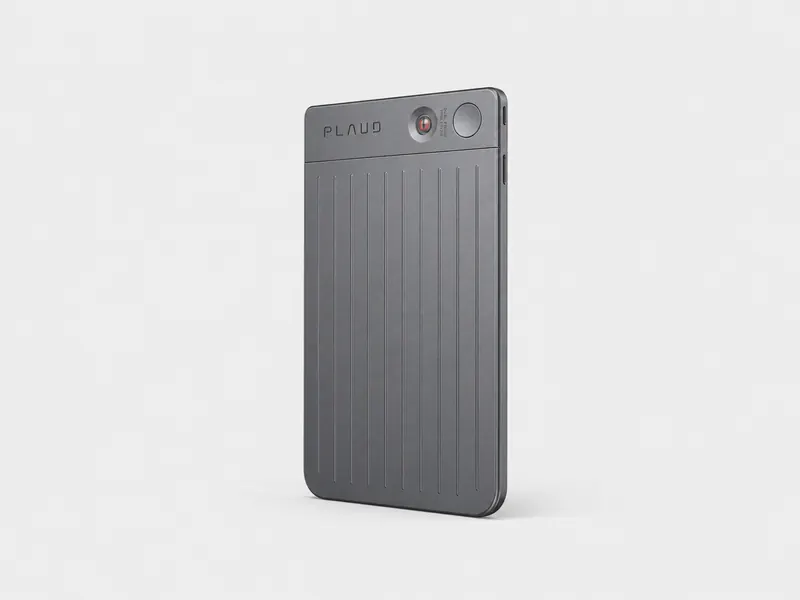
Plaud Note Pro
Card recorder with automatic call/meeting switching and 112 transcription languages.
Choose it if: You want a conventional card recorder for meetings and phone calls.
Check price$189 →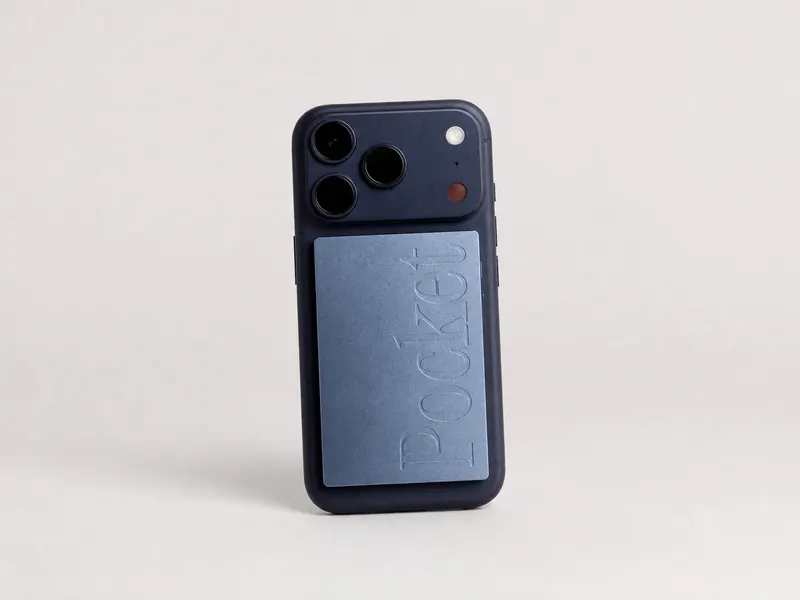
MagSafe card recorder with advertised unlimited core processing without a subscription.
Choose it if: You want included core processing and a searchable memory of conversations.
Check price$139 →Short answer
Plaud Note Pro at $189 is the recorder we would buy over the $139 Pocket for a conventional meeting-and-call workflow. Choose Plaud Note Pro if you want automatic call switching, 112 transcription languages, 64GB of storage and the lowest measured error rates available. Choose Pocket if its advertised unlimited core processing without a subscription matters more than those features, or if the $50 price gap does. Our preferred recorder across the wider category remains Notta Memo at $149.
Round by round
| Round | Plaud Note Pro | Winner | |
|---|---|---|---|
| Recording in-person meetings | 4 MEMS mics plus a voice pickup unit; Plaud advertises pickup up to 16.4 ft (5 m). In August 2026 English transcription tests in Shenzhen meeting rooms, Plaud Note Pro had a 14.0% word error rate in a 4-speaker sales pitch and 41.1% in an 8-speaker team meeting. | Card recorder that mounts to the phone with MagSafe. No test-centre transcription data for Pocket, so no measured comparison. | Plaud Note Pro |
| Recording phone calls | Smart dual-mode detects a call and switches without a manual step; the recorder still has to be on the phone, in the included magnetic case. | MagSafe mount keeps the recorder on the phone. A defined call-capture workflow is less documented than Plaud's on Pocket's site. | Plaud Note Pro |
| Transcription accuracy | In August 2026 English tests in Shenzhen meeting rooms, Plaud Note Pro had word error rates from 9.2% (2-speaker interview) to 41.1% (8-speaker team meeting). In Japanese tests it had character error rates from 5.3% to 46.0%. | No published word-error rate and no test-centre data for Pocket. Accuracy claims cannot be compared on numbers. | Plaud Note Pro |
| Transcription languages | 112 languages, per Plaud's product page and plan page. That is the wider list. | Pocket's site does not publish a comparable language count on the pages we checked. | Plaud Note Pro |
| Subscription model | 300 minutes a month included on Starter; Pro is $99.99 a year for 1,200 minutes a month. | Advertised unlimited core processing without a subscription, alongside subscription-trial offers. | |
| Battery | Advertised up to 50 hours of continuous recording from a 500mAh battery, and up to 60 days of standby. Not a timed rundown. | No comparable advertised battery figure published on the pages we checked. | Plaud Note Pro |
| Storage | 64GB. | Not published on the pages we checked. | Plaud Note Pro |
| Wearable use | Plaud NotePin S, at $179, is the wearable alternative in the Plaud range, with physical recording and highlighting controls. | Pocket's MagSafe card design keeps it on the phone rather than on clothing; within Pocket's own range it is the wearable-adjacent option. | Tie |
| First-year cost | $189 device and $0 Starter for 300 minutes a month; $288.99 with a year of Pro at 1,200 minutes a month. | $139 device with advertised unlimited core processing and no required subscription. | |
| Price | $189, including the magnetic case. | $139. | |
| Overall | 6 rounds | 3 rounds | Plaud Note Pro |
1 round tied.
Specs side by side
| Spec | Plaud Note Pro | |
|---|---|---|
| Microphones | 4 MEMS + 1 voice pickup unit | Card recorder, MagSafe mount |
| Transcription languages | 112 | Not published on pages checked |
| Subscription | Starter 300 min/month included; Pro $99.99/year for 1,200 min/month | Advertised unlimited core processing without a subscription |
| Battery | Up to 50 hours advertised (500mAh) | Not published on pages checked |
| Storage | 64GB | Not published on pages checked |
| Call recording | Smart dual-mode, recorder on the phone | MagSafe mount on the phone |
| Wearable option in range | Plaud NotePin S, $179 | Pocket itself, phone-mounted |
| Price | $189, magnetic case included | $139 |
Which is better, Plaud or Pocket?
Plaud Note Pro is our pick over Pocket for a conventional meeting-and-call recorder. That verdict is researched from manufacturer pages and August 2026 test-centre transcription data for Plaud Note Pro, not from hands-on use of either device.
The two products answer different questions. Plaud Note Pro is a card recorder built around a defined recording session: slide it onto the phone for a call, or leave it on the table for a meeting, and it transcribes within a monthly allowance. Pocket, at $139, is a MagSafe card recorder that emphasises captured conversations as a searchable memory, with advertised unlimited core processing without a subscription.
| Decision | Our recommendation |
|---|---|
| Conventional calls and meetings | Plaud Note Pro ($189) |
| Wearable within Plaud | Plaud NotePin S ($179) |
| Unlimited core processing proposition | Pocket ($139) |
| Wider-category preference | Notta Memo ($149) |
Neither choice should be made solely from a feature count. The app is where most of the long-term value sits, and the subscription terms are where buyers get caught out. Both are covered below.
Plaud Note Pro has one advantage this comparison can put numbers on. In August 2026 English transcription tests in Shenzhen meeting rooms, Plaud Note Pro had a 9.2% word error rate in a two-person interview and a 14.0% word error rate in a four-speaker sales pitch. Pocket has no published word-error rate and was not in those tests, so its accuracy cannot be compared on numbers. A buyer who wants measured accuracy before paying has only one brand in this pair that can supply it.
Pocket has one advantage that is hard to argue with on price: $139 against $189, and advertised unlimited core processing without a subscription. If your monthly transcription volume is high, that difference compounds. A buyer who transcribes 1,200 minutes a month pays $288.99 in the first year with Plaud Note Pro on the Pro plan, against $139 for Pocket if its core processing covers that volume. The subscription section works through the arithmetic.
There is a third option worth naming before the detail starts. Our overall category preference is Notta Memo at $149. An eligible owner gets 600 transcription minutes a month on Notta's Hardware Plan, double Plaud's Starter allowance, at a price between the two devices here. That comparison is covered in notta memo vs plaud note pro, and the full field is in the best ai voice recorder roundup.
The rest of this page works through the two head-to-head pairings that matter — Plaud Note Pro against Pocket, and Plaud NotePin S against Pocket — then the subscription arithmetic, then the buy/skip advice.
Plaud Note Pro vs Pocket
Plaud Note Pro is the better buy of the two for a defined recording session. Pocket is the better buy if ongoing retrieval of captured conversations is the feature you intend to use.
Plaud Note Pro covers conventional desk and phone use. It has 4 MEMS microphones plus a voice pickup unit, pickup advertised up to 16.4 ft (5 m), 64GB of storage, and transcription in 112 languages. Smart dual-mode detects a phone call and switches between call and meeting recording without a manual step. The recorder still has to be on the phone, in the included magnetic case. Those are manufacturer figures from Plaud's product page, not Testbench measurements.
Pocket mounts to the back of an iPhone with MagSafe and treats every captured conversation as part of a searchable memory. Its advertised unlimited core processing without a subscription is the headline. What Pocket's site does not publish, on the pages we checked, is a language count, a storage figure or an advertised battery figure that can sit next to Plaud Note Pro's numbers. That absence is itself information: a buyer who compares on published specs is comparing one full column against one partial one.
| Plaud Note Pro | ||
|---|---|---|
| Price | $189 | $139 |
| Mount | Magnetic case on the phone | MagSafe on the phone |
| Call switching | Automatic dual-mode | Not documented comparably |
| Transcription languages | 112 | Not published on pages checked |
| Storage | 64GB | Not published on pages checked |
| Battery | Up to 50 hours advertised | Not published on pages checked |
| Included processing | 300 minutes a month on Starter | Advertised unlimited core processing |
On accuracy, only Plaud Note Pro has measured figures. In August 2026 English transcription tests in Shenzhen meeting rooms, Plaud Note Pro had word error rates of 15.3% in a one-speaker speech scenario, 9.2% in a two-person interview, 14.0% in a four-speaker sales pitch, 17.5% in a six-speaker class and 41.1% in an eight-speaker team meeting. Those are single recorded sessions per condition, not repeated trials. Pocket was not tested, so these figures describe Plaud Note Pro; they are not a head-to-head win.
What do those numbers mean for a buyer? A 9.2% word error rate in a two-person interview means roughly one word in eleven is wrong in that condition — usable for a summary, but worth checking names and figures against the audio. The 41.1% rate in the eight-speaker team meeting means more than one word in three is wrong: expect a heavy cleanup job after a large meeting. The pattern is consistent across the whole test programme — error rates rise with speaker count — so it is a property of the scenario, not a defect unique to Plaud Note Pro.
The Japanese results from the same programme tell the same story in a second language. Plaud Note Pro had character error rates of 6.5% in a one-speaker speech scenario, 5.3% in a two-person interview, 15.1% in a two-speaker sales pitch at 8 m, 17.1% in a four-speaker sales pitch, 46.0% in a six-speaker consultation, 39.0% in an eight-speaker team meeting, 18.0% in a two-person interview at 6 m, 12.8% in a two-speaker sales pitch at 6 m and 22.3% in a two-person interview at 8 m. Japanese uses character error rate, not word error rate, so keep the two languages separate when quoting them. The distance conditions are worth a buyer's attention: at 6 m and 8 m from the speakers, error rates are two to four times the close-range interview figures. Plaud advertises pickup up to 16.4 ft (5 m), and the 6 m and 8 m tests sit at or beyond that line.
Plaud Note Pro also has app depth that Pocket's published pages do not match in this comparison. Plaud Desktop, a beta app for Windows and macOS, records Zoom, Google Meet and Microsoft Teams audio from the computer without a bot, and can start and stop on its own when a meeting begins and ends. Google Calendar integration reminds you to start and stop a recording, names the file after the event and adds meeting context to summaries. Zapier is on every Plaud plan, including the free Starter. One gap to know about: Plaud's help centre says Plaud doesn't currently support translation between languages, or bilingual transcription. If live translation matters, neither product in this pair advertises it.
The device on its own is covered in the plaud note pro review, and Pocket in the pocket ai review.
Plaud NotePin S vs Pocket
Plaud NotePin S, at $179, is the closer wearable alternative to Pocket within the Plaud range. If your first requirement is keeping the recorder on your person rather than on your phone, NotePin S is the comparison to make.
NotePin S is a wearable pin with physical recording and highlighting controls. Pocket is a card that lives on the back of a phone. That is a real difference in everyday use: a pin records while your phone is in your pocket or bag, while a phone-mounted card needs the phone present. A phone-mounted recorder also shares the phone's battery and attention; a pin is a separate device with its own controls.
| Plaud NotePin S | ||
|---|---|---|
| Price | $179 | $139 |
| Form | Wearable pin | MagSafe card |
| Controls | Physical recording and highlighting buttons | Phone-mounted operation |
| Best for | Recording without the phone in hand | Searchable memory tied to the phone |
NotePin S also has measured transcription figures. In August 2026 English tests in Shenzhen meeting rooms, Plaud NotePin S had word error rates of 15.6% in a one-speaker speech scenario, 9.6% in a two-person interview, 20.9% in a six-speaker class and 53.2% in an eight-speaker team meeting. Those sit close to Plaud Note Pro's figures in the same conditions, slightly behind in each: 15.6% against 15.3%, 9.6% against 9.2%, 20.9% against 17.5% and 53.2% against 41.1%. The four-speaker sales-pitch condition was not run for NotePin S, so the two pins of data are not complete. Pocket again has no comparable data.
For a buyer, that comparison says the two Plaud devices are close enough on accuracy that form factor, not transcription, should decide between them. The bigger gap is the eight-speaker meeting, where NotePin S's 53.2% is markedly worse than Note Pro's 41.1% — if your recordings are large meetings, the card is the safer Plaud.
Compare attachment, access to the button and microphone placement before choosing a wearable. That is a separate decision from choosing between card-style call recorders, and it is covered in the plaud notepin s review. NotePin S at $179 also sits $40 above Pocket at $139, so the wearable question carries a price of its own.
Subscription costs compared
Pocket costs less to own than Plaud Note Pro over a year for heavy users, because its core processing is advertised as unlimited without a subscription. Plaud Note Pro costs less only if 300 minutes a month is enough.
| Option | Device | Annual plan | First-year total | Monthly transcription |
|---|---|---|---|---|
| Plaud Note Pro, Starter | $189 | $0 | $189 | 300 minutes |
| Plaud Note Pro, Pro | $189 | $99.99 | $288.99 | 1,200 minutes |
| $139 | $0 | $139 | Advertised unlimited core processing |
US prices checked 2 October 2026. Totals are one device plus one year of the listed plan, excluding tax, shipping and promotions.
The arithmetic is straightforward at the extremes. A buyer who stays inside 300 minutes a month pays $189 for Plaud Note Pro against $139 for Pocket — a $50 gap, and the only difference in year one. A buyer who needs 1,200 minutes a month pays $288.99 for Plaud Note Pro in year one, against $139 for Pocket if its advertised unlimited core processing covers that volume. That is a $149.99 gap in year one, and the same $99.99 again in every later year, because the device price is paid once and the plan recurs.
Put the Starter allowance in hours to see whether it fits you. Three hundred minutes a month is five hours of transcription. A buyer with two hour-long meetings a week records roughly sixteen hours a month, more than three times the Starter allowance — that buyer is on a paid Plaud plan or on Pocket's model. A buyer with a weekly one-hour meeting records about four hours and stays inside Starter.
The catch is what "core processing" means. Pocket's site advertises unlimited core minutes without a subscription, alongside subscription-trial offers, and separate paid features and trial terms apply. A simple paid-plan price comparison misses an important difference: what you can keep using after the trial ends. Check Pocket's current terms on its own pages before buying; the pocket ai review tracks them.
Plaud's tiers are the conventional model. Starter, included with the device, gives 300 minutes a month. Pro is $99.99 a year for 1,200 minutes a month. Plaud Unlimited is listed at $20 a month on the pricing page's annual view, and at $19.99 a month in that page's FAQ, with a 24-hour daily cap. The two Unlimited figures disagree with each other on Plaud's own page, which is why both are quoted here. Zapier and Google Calendar integration are on every Plaud plan, Starter included, and all plans include Plaud Desktop, which requires a device. Plaud's plans are explained in more detail in notta memo vs plaud note pro.
One more comparison point: Notta Memo at $149 gives an eligible owner 600 minutes a month on its Hardware Plan, double Plaud's Starter allowance, at a price between the two devices here. Eligibility has rules: the Hardware Plan applies only to an eligible account with the recorder bound, and a free-workspace owner qualifies while a member of someone else's workspace does not.
Which should you buy?
Buy the Plaud Note Pro if you want the conventional recording workflow we favour here. At $189 it gives you automatic call switching, 112 transcription languages, 64GB of storage, an advertised 50 hours of recording, and the only measured error rates in this comparison.
Buy the Pocket if its included processing and retrieval approach solve a specific need. At $139, with advertised unlimited core processing and no required subscription, it is the cheaper device and the cheaper first year for anyone whose monthly volume exceeds Plaud's 300 Starter minutes. You give up the published language count, the published storage figure and any measured accuracy data.
| If you… | Buy |
|---|---|
| Record calls and meetings in defined sessions | Plaud Note Pro |
| Transcribe more than 300 minutes a month | Pocket, or a Plaud paid plan |
| Want a wearable | Plaud NotePin S |
| Want the lowest total cost | |
| Want the widest feature set we can verify | Plaud Note Pro |
| Record large meetings often | Plaud Note Pro |
| Want measured accuracy before buying | Plaud Note Pro |
Two of those rows deserve a sentence each. Large meetings favour Plaud Note Pro because it is the only device in this comparison with a measured eight-speaker figure, 41.1% word error rate in the August 2026 tests — poor in absolute terms, but the only number on the table. And "widest feature set we can verify" is deliberately narrow: Plaud's column is full of published figures, and Pocket's is not, so Plaud wins on verifiability as much as on features.
Skip Plaud Note Pro if $50 and the subscription model matter more than its extra features. Skip Pocket if you need a published language count or measured accuracy before you buy, or if your recordings are phone-heavy and you want a documented call-switching workflow.
Before buying either, compare Notta Memo at $149: it is our overall preference in the ai voice recorder category, and it offers substantial free processing for eligible owners. The wider field, including Anker Soundcore Work and HiDock P1, is in the best ai voice recorder roundup. Recording calls and meetings can require consent, so check the consent rules that apply to you before you rely on either device.
Frequently asked questions
Which is better, Plaud or Pocket?
Plaud Note Pro is our pick for the conventional card-recorder workflow: calls, meetings and a defined recording session. Pocket may fit frequent users who prioritise its advertised unlimited core processing without a subscription.
Does Pocket AI require a subscription?
No. Pocket currently advertises unlimited core processing without a subscription. Separate paid features and subscription-trial terms apply, so check what is included after any trial ends.
Is Pocket cheaper than Plaud?
Yes, on the device price: $139 against $189 for Plaud Note Pro, checked 2 October 2026. Compare the exact device offer and the processing you need: Pocket's core-processing model can reduce recurring cost, but a promotional hardware price alone is not the total.
Sources
- [1]Plaud Note Pro specifications and price — $189, 4 MEMS + VPU, up to 16.4 ft, up to 50 hours, 64GB, 112 languages, Starter 300 minutes. Checked 2 October 2026.
- [2]Plaud AI plan pricing — Pro $99.99 a year for 1,200 minutes a month; Unlimited listed at $20 a month on the annual view and $19.99 in the FAQ, with a 24-hour daily cap; Zapier and Google Calendar on all plans; Plaud Desktop requires a device. Checked 2 October 2026.
- [3]Plaud NotePin S specifications — $179 wearable pin with physical recording and highlighting controls. Checked 2 October 2026.
- [4]Plaud: does Plaud support translation? — Says Plaud doesn't currently support translation between languages. Checked 2 October 2026.
- [5]Plaud Desktop — Beta for Windows and macOS; detects Zoom, Google Meet and Teams calls and captures audio without a bot. Checked 2 October 2026.
- [6]Plaud: Calendar — Google Calendar only; start and stop reminders, auto-naming and meeting context. Checked 2 October 2026.
- [7]Pocket product and membership information — $139 device, MagSafe card design, advertised unlimited core processing without a subscription, subscription-trial offers. Checked 2 October 2026.
- [8]Notta Hardware Plan — 600 minutes a month for an eligible account with the recorder bound; free-workspace owner qualifies. Checked 2 October 2026.
- [9]ASR test results (Shenzhen meeting rooms, 18 and 28 August 2026) — English word error rates and Japanese character error rates for Plaud Note Pro and Plaud NotePin S, single recorded sessions per condition. Not an independent Testbench Lab measurement.