Comparison · Researched · Updated
Plaud Note vs Plaud Note Pro
Researched comparison of Plaud Note ($159) and Plaud Note Pro ($189): display, modes, microphones, battery, transcription test results, plans and price.
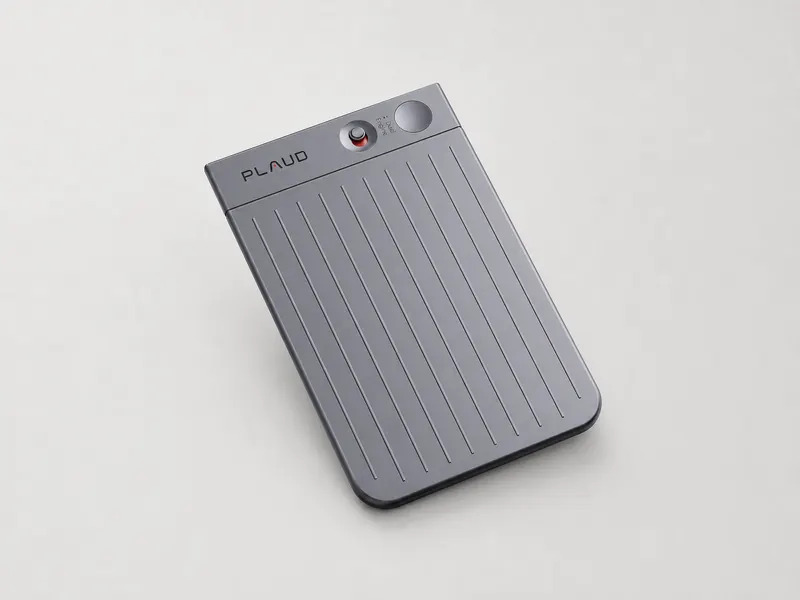
Plaud Note
Plaud's original card recorder, feeding the same Plaud app and plans.
Choose it if: You want the lowest price into the Plaud ecosystem, or you already own one.
Check price$159 →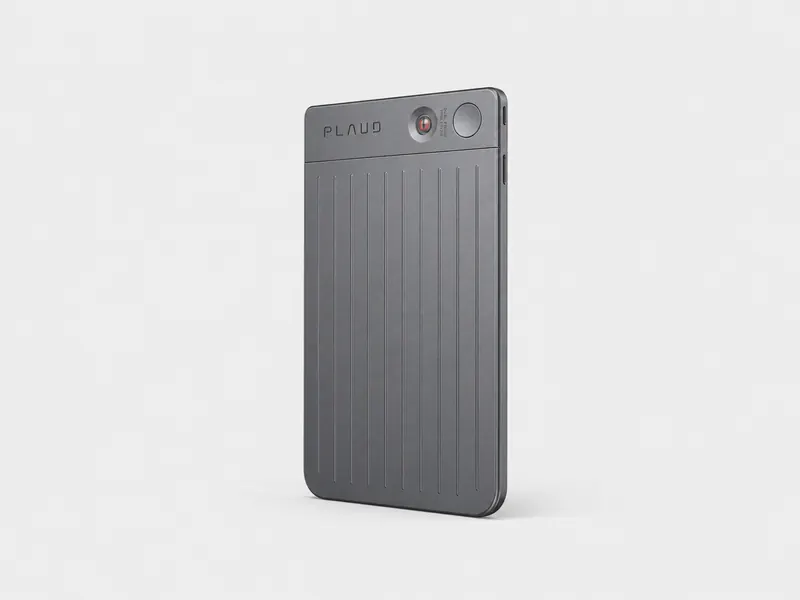
Plaud Note Pro
Card recorder with a display, automatic mode switching and a longer advertised recording time.
Choose it if: You are buying new and will use the display, automatic modes or longer advertised battery.
Check price$189 →Short answer
Plaud Note Pro at $189 is the Plaud card recorder we would buy instead of the $159 Plaud Note. Choose Plaud Note Pro if you are buying new and will use its display, automatic call/meeting switching or advertised 50-hour recording time. Choose Plaud Note if you want the lowest price into the Plaud app, or if your existing Note already meets your needs.
Round by round
| Round | Plaud Note | Plaud Note Pro | Winner |
|---|---|---|---|
| Price | $159 on Plaud's store, checked 2 October 2026. That is $30 less than the Pro before any plan. | $189 on Plaud's product page, checked 2 October 2026. The $30 premium buys the feature differences in the rounds below. | Plaud Note |
| Display and controls | No display, per Plaud's own comparison of the two models. Recording state is read from the app and the device's indicators. | Adds a display, per the same comparison. Recording state and settings are readable on the device itself. | Plaud Note Pro |
| Recording modes | Mode selection is manual: the owner sets call or meeting recording before it starts. | Automatic mode selection. Plaud calls it smart dual-mode: the recorder detects a phone call and switches without a manual step. The recorder still has to be on the phone. | Plaud Note Pro |
| Microphones and pickup | A narrower microphone setup than the Pro, per Plaud's comparison. Plaud's published pickup distance for the Note was not in the sources we checked for this page. | 4 MEMS microphones plus a voice pickup unit, with pickup advertised up to 16.4 ft (5 m). That is the broader setup of the two. | Plaud Note Pro |
| Battery | Plaud's comparison lists battery as a difference in the Pro's favour, but the Note's advertised recording time was not in the sources we checked for this page. | Up to 50 hours of continuous recording advertised, from a 500mAh battery, plus up to 60 days of standby. Not a timed rundown. | Plaud Note Pro |
| Transcription accuracy | Not tested. Plaud Note has no test-centre result on this page, so it has no measured error rate to compare. | In August 2026 English transcription tests in Shenzhen meeting rooms, Plaud Note Pro had a 9.2% word error rate in a two-person interview and 15.3% in one-speaker speech. No Plaud Note recording from the same sessions. | Tie |
| Transcription languages | Both models feed the same Plaud app. The Note's language count was not in the sources we checked for this page. | 112 transcription languages with speaker labels and custom vocabulary, per Plaud's product page. | Plaud Note Pro |
| Software and plans | The same Plaud ecosystem: the same app, summaries, templates and plan tiers, including the 300-minute Starter allowance. | Identical software and plans. The Pro adds no separate transcription service; both models feed the same account. | Tie |
| Value for an existing owner | If your Note already records your calls and meetings, the Pro's display and automatic switching are conveniences, not new capability. | An upgrade makes sense only for a feature the owner expects to use: the display, automatic modes or the longer advertised battery. | Plaud Note |
| Overall | 2 rounds | 5 rounds | Plaud Note Pro |
2 rounds tied.
Specs side by side
| Spec | Plaud Note | Plaud Note Pro |
|---|---|---|
| Price | $159 | $189 |
| Display | No display | Display |
| Mode switching | Manual | Automatic smart dual-mode |
| Microphones | Narrower setup than the Pro | 4 MEMS + 1 voice pickup unit |
| Pickup distance | Not confirmed in our sources | Up to 16.4 ft (5 m) advertised |
| Battery | Not confirmed in our sources | Up to 50 hours advertised (500mAh) |
| Transcription languages | Not confirmed in our sources | 112 |
| Storage | Not confirmed in our sources | 64GB |
| Included plan | Starter, 300 minutes a month | Starter, 300 minutes a month |
| Store | plaud.ai | plaud.ai/products/plaud-note-pro |
What does the Note Pro add?
Plaud Note Pro adds a display, automatic mode selection, a broader microphone setup and an endurance advantage over the Plaud Note. Those are the four differences Plaud itself lists between the two models. The value is in how they change capture, not in a separate transcription service: both recorders feed the same Plaud app, the same summaries and the same plans.
The display is the most visible difference. On Plaud Note Pro you can read recording state and settings on the device. On Plaud Note there is no display, so you check the app or the device's indicators instead. That is a convenience difference, and it matters most if you start recordings away from your phone. If you always begin a recording with the app open, the display saves you little. If you set the recorder on a table and walk away, it is the difference between confirming the recording on the spot and trusting that it started.
Automatic mode selection is the most functional difference. Plaud Note Pro uses smart dual-mode: it detects a phone call and switches between call and meeting recording without a manual step. The Plaud Note owner sets the mode by hand before recording starts. Neither method removes the placement step — for a call, the recorder still has to be mounted on the phone with its magnetic case, because the call audio reaches the recorder through contact with the phone, not through the air. What automatic switching removes is the risk of setting the wrong mode and capturing a call in meeting mode, or a meeting in call mode. Buyers who alternate between calls and in-person sessions several times a day get more out of that than buyers who mostly record one or the other.
The microphone setup is broader on the Pro. Plaud Note Pro has 4 MEMS microphones plus a voice pickup unit, and Plaud advertises pickup up to 16.4 ft (5 m). Those are manufacturer claims, not Testbench measurements. Plaud's published figures for the original Note's microphones and pickup distance were not in the sources we checked for this page, so we compare the Pro against Plaud's own description of the Note as the narrower setup. What the advertised pickup distance means in practice is room coverage: 16.4 ft (5 m) is roughly the diagonal of a medium meeting room, so a recorder at the head of the table can advertise coverage of the far seats. A narrower pickup means the recorder has to sit closer to the quietest speaker to capture them cleanly.
| Difference | Plaud Note | Plaud Note Pro |
|---|---|---|
| Display | No | Yes |
| Mode switching | Manual | Automatic smart dual-mode |
| Microphones | Narrower setup | 4 MEMS + voice pickup unit |
| Pickup | Not confirmed in our sources | Up to 16.4 ft (5 m) advertised |
| Battery | Not confirmed in our sources | Up to 50 hours advertised |
| Storage | Not confirmed in our sources | 64GB |
| Price | $159 | $189 |
The endurance advantage is advertised, not timed. Plaud Note Pro lists up to 50 hours of continuous recording from a 500mAh battery, and up to 60 days of standby. We did not run a side-by-side rundown, and Plaud's advertised figure for the original Note was not in the sources we checked for this page. Treat the battery round as a Pro win on Plaud's own comparison, not on a measured test. For a buyer, the practical question is whether one charge covers your longest day. Fifty hours of advertised continuous recording is more than a full week of all-day meetings on paper; even at half the advertised figure in real conditions, it outlasts a working day with margin. The 60-day standby figure matters if the recorder lives in a bag between uses rather than on a charger.
The 64GB storage figure on the Pro is the same kind of headroom calculation. At the Pro's advertised battery ceiling, storage — not battery — is what caps a very long session. Plaud's published storage figure for the original Note was not in the sources we checked for this page, so we cannot compare the two on capacity.
What the Pro does not add is a different transcription service. Both models transcribe in the Plaud app, use the same plan tiers and start on the same free Starter allowance of 300 minutes a month. Both get the same summaries, the same templates and the same integrations. A buyer moving from the Note to the Pro keeps the same account, the same library and the same plan. The device on its own is covered in the plaud note pro review and the plaud note review.
Is the Plaud Note Pro worth $30 more?
Yes — for a first purchase at the published $159 versus $189, we would spend the additional $30 on the Plaud Note Pro. That conclusion is an editorial judgement about the feature difference. It does not mean every recording or transcript becomes better by the same amount.
The arithmetic is simple because the software costs nothing extra. Both devices include the free Starter plan with 300 transcription minutes a month, and both can move up to the same paid tiers. Plaud Pro, the subscription, is $99.99 a year for 1,200 minutes a month on either device. The only first-year difference between the two purchases is the $30 on the hardware.
| Option | Device | Annual plan | First-year total | Monthly transcription |
|---|---|---|---|---|
| Plaud Note, Starter | $159 | $0 | $159 | 300 minutes |
| Plaud Note Pro, Starter | $189 | $0 | $189 | 300 minutes |
| Plaud Note, Plaud Pro | $159 | $99.99 | $258.99 | 1,200 minutes |
| Plaud Note Pro, Plaud Pro | $189 | $99.99 | $288.99 | 1,200 minutes |
US prices checked 2 October 2026. Totals are one device plus one year of the listed plan, excluding tax, shipping and promotions. Paid-plan minutes are that plan's own allowance, not an addition to the free minutes.
What the $30 buys is the display, automatic mode switching, the broader microphone setup and the longer advertised battery. Whether that is worth $30 depends on how you record. If you start recordings with your phone in hand, the display matters less. If your days mix calls and meetings, automatic switching removes a step you would otherwise take every time. If you record long events, the advertised 50-hour ceiling is headroom; the Note's own advertised recording time was not in the sources we checked for this page.
On accuracy, the evidence only covers one of the two. In August 2026 English transcription tests in Shenzhen meeting rooms, Plaud Note Pro had a 9.2% word error rate in a two-person interview, 15.3% in one-speaker speech, 14.0% in a four-speaker sales pitch, 17.5% in a six-speaker class and 41.1% in an eight-speaker team meeting. In the Japanese character-error-rate tests from the same sessions, Plaud Note Pro scored 5.3% in a two-person interview, 6.5% in one-speaker speech, 17.1% in a four-speaker sales pitch, 46.0% in a six-speaker consultation and 39.0% in an eight-speaker team meeting. Those are single recorded sessions per condition, not repeated trials. The original Plaud Note was not in those tests, so the $30 buys no measured accuracy advantage that we can point to — only the broader microphone setup that Plaud itself advertises.
The conditions matter as much as the numbers. The English tests were run in-person in Shenzhen meeting rooms: a medium meeting room for the one-speaker speech, a small meeting room for the two-person interview, a medium meeting room for the four-speaker sales pitch, and an open meeting room or training area for the six-speaker class and the eight-speaker team meeting. The Japanese tests included distance-controlled conditions in a Yange meeting room: a two-person interview at 6 m (18.0% character error rate) and at 8 m (22.3%), and a two-speaker sales pitch at 6 m (12.8%) and at 8 m (15.1%). Two Japanese conditions were real phone calls rather than in-person sessions: a two-person interview (character error rate not quoted here) and a two-speaker sales pitch. English and Japanese figures are not comparable — English uses word error rate, Japanese uses character error rate — so keep the two languages separate when you read any table of these results.
The pattern in those numbers is worth knowing whatever you buy: error rates rise with speakers. A two-person interview at 9.2% English word error rate is a different product experience from an eight-person meeting at 41.1%. At roughly one error in eleven words, a two-person interview transcript is readable with light cleanup. At roughly two errors in five words, an eight-person meeting transcript needs real work before you can act on it. For reference points from the same tests, an Anker AI Recorder scored 18.5% in the two-person English interview against Plaud Note Pro's 9.2%, and a phone's built-in recorder, iPhone Voice Memos, scored 56.2% in the eight-speaker English team meeting against Plaud Note Pro's 41.1%. Those are other products' results, not Plaud Note's, but they show the spread a recorder choice makes. Check names, figures and technical terms against the audio before you act on a summary, on either device.
The $30 case weakens at a discount. If the original Note is on sale far enough below $159, the Pro's conveniences have to justify a bigger gap. The reverse also holds: if the Pro is discounted, the gap can close to nothing. Check the live price on Plaud's store before you decide; our prices are from 2 October 2026. How the Pro fares outside Plaud's range is in notta memo vs plaud note pro.
Which should you buy?
Buy the Plaud Note Pro if you are buying new and the $30 premium is affordable. That is our pick inside Plaud's card range: the display, automatic mode switching and advertised 50-hour recording time are worth $30 to a first-time buyer, and the software and plans are identical either way.
The Pro buyer is someone whose week mixes phone calls and in-person meetings, records long sessions, or starts recordings without the app open. Automatic switching pays off on the first of those; the advertised battery and storage pay off on the second; the display pays off on the third. None of those are transcription improvements — the Pro's measured error rates in the August 2026 Shenzhen tests are the only accuracy numbers we have, and the Note was not in them — so buy the Pro for capture, not for a better transcript.
Buy the Plaud Note if price is the deciding factor. At $159 it is the cheapest way into the Plaud app, the same 300 Starter minutes and the same summaries. The Note buyer gives up the display, sets the call/meeting mode by hand, and works with the narrower microphone setup — but keeps every software feature the Pro has, because both models feed the same account. If your recordings are mostly one kind of session, the manual mode switch is one step you set once at the start, not a daily friction.
The Note is also the keep choice for an existing owner. If your Note already records your calls and meetings, the Pro's differences are conveniences rather than new capability, and an upgrade makes sense only for a feature you expect to use — the display, the automatic modes or the longer battery. A $30 list-price gap is small, but an upgrade also means moving your recordings or re-pairing a new device for features you may not touch.
| Buyer | Our choice |
|---|---|
| First Plaud purchase, $30 not a barrier | Plaud Note Pro |
| Lowest price into the Plaud app | Plaud Note |
| Existing Note owner | Keep it, unless you need the display, auto modes or battery |
| Mostly one kind of recording (calls only, or meetings only) | Plaud Note — the manual switch costs little |
| Mixed calls and meetings every day | Plaud Note Pro — automatic switching earns its keep |
| Open to other brands | Notta Memo |
Skip both if you are open to changing brands. Our first choice across ai voice recorder brands is Notta Memo at $149: $10 less than the Plaud Note and $40 less than the Pro, with 600 free transcription minutes a month for an eligible owner and live translation, which Plaud does not offer. Plaud Note Pro keeps its own wins in that comparison — the advertised 50-hour recording time and 112 transcription languages against Notta Memo's advertised 30 hours and 58 languages. The full case on both sides is in notta memo vs plaud note pro.
One caveat on availability: Plaud's own comparison of the two models still lists the original Note, so it is not discontinued on that evidence. Check stock in your country and the exact retailer offer before you plan around the $159 price. Recording calls can require consent, whichever model you buy — check your local recording-consent laws first.
Frequently asked questions
Is Plaud Note Pro worth it over Plaud Note?
Yes, for a first purchase with a $30 price gap — we favour the Pro. It adds a display, automatic call/meeting switching, a broader microphone setup and a longer advertised battery, and the software and plans are identical. An existing Note owner should upgrade only for a feature they expect to use.
Is the original Plaud Note discontinued?
No, on the evidence we have — Plaud's own comparison of the two models still lists it. Check stock in your country and the exact retailer offer before you buy, because availability can differ by region.
Sources
- [1]Plaud Note Pro specifications and price — $189, display, smart dual-mode, 4 MEMS + VPU, up to 16.4 ft, up to 50 hours, 64GB, 112 languages, Starter 300 minutes. Checked 2 October 2026.
- [2]Plaud store, Plaud Note — Plaud Note price $159. Checked 2 October 2026.
- [3]Plaud AI Annual Pro Plan — Annual Pro price $99.99 for 1,200 minutes a month, on either device. Checked 2 October 2026.
- [4]ASR test results — Plaud Note Pro English word error rates, Japanese character error rates and Anker AI Recorder / iPhone Voice Memos reference figures (Shenzhen meeting rooms, 18 and 28 August 2026). Single recorded sessions per condition; Plaud Note not tested.