Comparison · Researched · Updated
Plaud Note Pro vs NotePin S: card or wearable?
Comparison of Plaud Note Pro ($189) and Plaud NotePin S ($179): form factor, phone calls, transcription accuracy from August 2026 tests, plans and price.
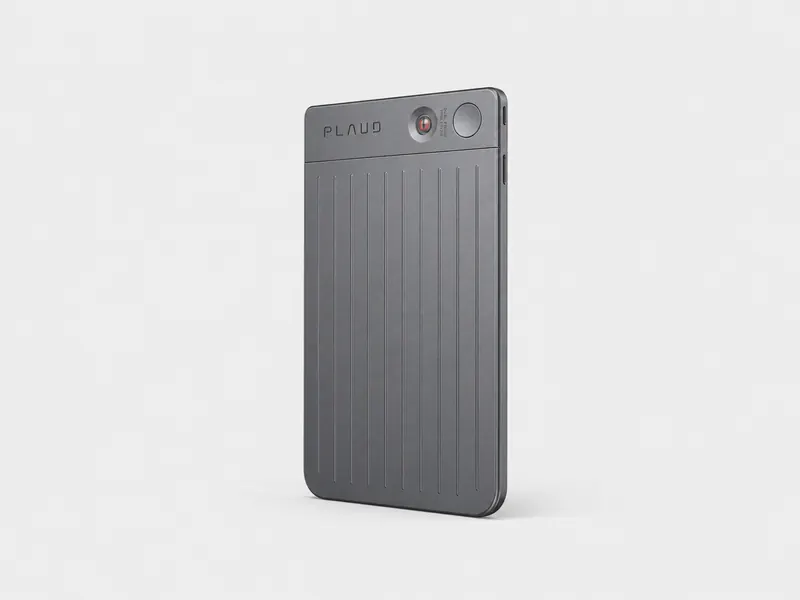
Plaud Note Pro
Card recorder that rides on your phone, with automatic call/meeting switching and the lower measured English error rates.
Choose it if: You want a conventional calls-and-meetings workflow and the better measured English transcription.
Check price$189 →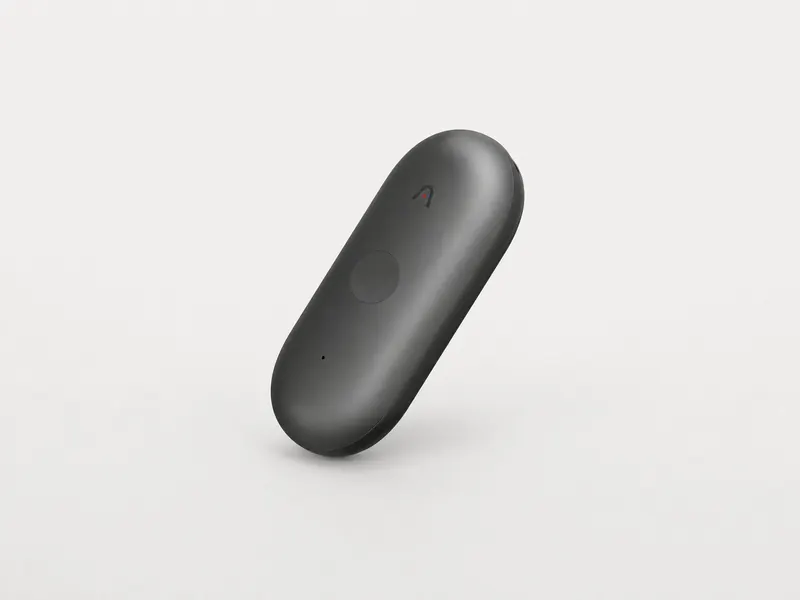
Plaud NotePin S
Wearable pin that clips to your clothing, so it is on you for unscheduled conversations.
Choose it if: You want a recorder that is on you all day, or if Japanese transcription matters.
Check price$179 →Short answer
Plaud Note Pro at $189 is the Plaud we would buy over the $179 NotePin S, because it wins phone calls, big meetings and every English transcription scenario tested. Choose Plaud Note Pro if your week is phone calls and scheduled meetings and you want the card-on-phone workflow. Choose NotePin S if you want a recorder that is on you all day, or if Japanese transcription is your main language, where it had the lower error rate in six of seven tested scenarios.
Round by round
| Round | Plaud Note Pro | Plaud NotePin S | Winner |
|---|---|---|---|
| Form factor and everyday carry | A card the size of a credit card that lives in a magnetic case on the back of your phone or on the meeting table. It has to be with you to record. | A pin that clips to your clothing, so it is on you during walks, hallway conversations and unscheduled talks. That is the easier device to have within reach. | Plaud NotePin S |
| Recording phone calls | Smart dual-mode detects a call and switches on its own, with the recorder seated on the phone in its magnetic case. That is the cleaner phone workflow. | A wearable pin records what reaches it in the room. It is not designed around the phone the way the card is. | Plaud Note Pro |
| English transcription accuracy | In August 2026 English tests in Shenzhen meeting rooms, Plaud Note Pro had the lower word error rate in every scenario tested: 15.3% vs 15.6% (one-speaker speech), 9.2% vs 9.6% (two-person interview), 14.0% (four-speaker sales pitch, NotePin S not tested), 17.5% vs 20.9% (six-speaker class) and 41.1% vs 53.2% (eight-speaker team meeting). | NotePin S was within a fraction of a point in the one- and two-speaker scenarios, but fell further behind as speakers were added. | Plaud Note Pro |
| Japanese transcription accuracy | In the same August 2026 tests, Note Pro had the higher character error rate in most Japanese scenarios: 6.5% vs 6.1% (speech), 5.3% vs 5.1% (interview), 17.1% vs 15.6% (four-speaker sales pitch), 46.0% vs 44.7% (six-speaker consultation) and 39.0% vs 38.9% (eight-speaker meeting). | NotePin S had the lower character error rate in six of the seven scenarios where both were tested, including 11.7% vs 12.8% in a two-speaker sales pitch at 6 m. Note Pro led only the 6 m interview, 18.0% vs 20.1%. | Plaud NotePin S |
| Large meetings | The eight-speaker English team meeting is the clearest gap: 41.1% word error rate for Note Pro against 53.2% for NotePin S. Six speakers: 17.5% against 20.9%. | NotePin S lost ground in every English scenario with six or more speakers. In Japanese the two were close at six and eight speakers. | Plaud Note Pro |
| Plans, software and integrations | Both devices sit on the same Plaud plans: 300 minutes a month on the included Starter, Zapier and Google Calendar integration on every plan, and the same app features. | Same Plaud account, same templates, same summaries. The software does not separate these two products. | Tie |
| Price | $189, including the magnetic case. | $179, $10 less. | Plaud NotePin S |
| Versatility as your only recorder | Note Pro covers phone calls, table-top meetings and online-meeting capture through Plaud Desktop, and it had the better English results. That is the more general tool. | NotePin S covers what happens while you wear it. It is the better second recorder or the better pick for a wearer, not the more general one. | Plaud Note Pro |
| Overall | 4 rounds | 3 rounds | Plaud Note Pro |
1 round tied.
Specs side by side
| Spec | Plaud Note Pro | Plaud NotePin S |
|---|---|---|
| Form factor | Card recorder with magnetic phone case | Wearable pin that clips to clothing |
| Price | $189 | $179 |
| English word error rate, 2-speaker interview (August 2026 tests) | 9.2% | 9.6% |
| English word error rate, 8-speaker team meeting (August 2026 tests) | 41.1% | 53.2% |
| Japanese character error rate, 2-speaker interview (August 2026 tests) | 5.3% | 5.1% |
| Phone-call workflow | Smart dual-mode, recorder on the phone | Wearable capture |
| Included plan | Starter, 300 minutes a month | Starter, 300 minutes a month |
| Zapier and Google Calendar | All plans | All plans |
Card or wearable: which fits how you work?
Plaud Note Pro is the card, and Plaud NotePin S is the wearable, and the shape is the first decision because it decides what each device can record. A card recorder belongs with your phone or on the meeting table. A wearable belongs on you, which makes it easier to reach during a walk or an unscheduled conversation. Choose the capture situation first and the product second.
How each one records
Plaud Note Pro is a card the size of a credit card. It ships with a magnetic case, and its smart dual-mode switches between phone calls and in-person recording on its own. For a call, the recorder sits on the back of the phone. For a meeting, it lies on the table or stays on the phone in your pocket. Plaud advertises pickup up to 16.4 ft (5 m). That is a manufacturer claim, not a Testbench measurement.
Plaud NotePin S is a pin. It clips to your clothing, so it is on your chest during a walk, a commute or a hallway conversation that never makes it to a calendar. The trade is that it records what reaches it from wherever you clip it, and it is not built around the phone the way the card is.
| Plaud Note Pro | Plaud NotePin S | |
|---|---|---|
| Form | Card, magnetic phone case | Pin, clips to clothing |
| Phone calls | Smart dual-mode, recorder on the phone | Wearable capture |
| Best position | On the phone or on the table | On you |
| Price | $189 | $179 |
US prices checked 2 October 2026.
What the tests measured, and how to read them
The transcription comparison between these two is the best-evidenced part of this page. The tests were run in meeting rooms in Shenzhen, with results dated 18 and 28 August 2026. They are not Testbench Lab measurements and not an independent test. Each result is a single recorded session per condition, not an average of repeated trials, and the scoring and transcript-normalisation methods were not supplied. Treat every figure below as a directional signal, not a lab certification.
English results use word error rate (WER) and Japanese results use character error rate (CER). Lower is better in both. The two scales cannot be compared with each other: a 9.2% English word error rate and a 5.3% Japanese character error rate are different measurements of different languages. Compare products only within the same language, scenario, speaker count and room.
The test conditions matter for interpreting the numbers. The one-speaker English speech test (C01) ran in a medium meeting room. The two-speaker interview (C02) ran in a small meeting room. The four-speaker sales pitch (C03) ran in a medium meeting room. The six-speaker class (C04) and eight-speaker team meeting (C05) both ran in an open meeting room and training area. The Japanese tests add distance: the 6 m and 8 m scenarios ran in the Yange meeting room, including two scenarios conducted as real phone calls (C13 and C15), though Plaud Note Pro and NotePin S results were not reported for those two conditions in the data we hold.
English results
In the August 2026 English tests, Plaud Note Pro had the lower word error rate in every scenario where both devices were tested.
| English scenario (WER, lower is better) | Plaud Note Pro | Plaud NotePin S |
|---|---|---|
| C01 Speech, 1 speaker, medium meeting room | 15.3% | 15.6% |
| C02 Interview, 2 speakers, small meeting room | 9.2% | 9.6% |
| C03 Sales pitch, 4 speakers, medium meeting room | 14.0% | — |
| C04 Class, 6 speakers, open meeting room | 17.5% | 20.9% |
| C05 Team meeting, 8 speakers, open meeting room | 41.1% | 53.2% |
NotePin S has no reported result for the four-speaker sales pitch, so that row is a Note Pro figure only, not a comparison.
The pattern is clear when you read the gaps rather than the totals. In the one-speaker scenario the gap is 0.3 points. In the two-speaker interview it is 0.4 points. At six speakers it is 3.4 points. At eight speakers it is 12.1 points. The two devices are effectively tied for one-on-one English conversation, and the card pulls away as the room fills.
For a buyer, that means the accuracy argument for Note Pro is really an argument about room size. If your English recordings are interviews, one-on-ones and small-group conversations, the measured difference between these two is small enough that form factor should decide. If your English recordings are classes, training sessions or team meetings with six or more voices, the card's measured advantage is real and grows with the crowd.
It also means both devices struggle in the biggest rooms. A 41.1% word error rate for Note Pro in the eight-speaker meeting is not a transcript you can trust without checking. Roughly two in five words are wrong at that rate. NotePin S's 53.2% is worse still. Neither Plaud device solved the eight-speaker English meeting in these tests; Note Pro merely failed less badly. Check names, figures and technical terms against the audio before you act on a summary from either device in a large meeting.
Japanese results
The Japanese results, measured as character error rate, point the other way. In the same August 2026 tests, NotePin S had the lower error rate in six of the seven scenarios where both devices were tested.
| Japanese scenario (CER, lower is better) | Plaud Note Pro | Plaud NotePin S |
|---|---|---|
| C06 Speech, 1 speaker, medium meeting room | 6.5% | 6.1% |
| C07 Interview, 2 speakers, medium meeting room | 5.3% | 5.1% |
| C08 Sales pitch, 2 speakers, Yange room, 8 m | 15.1% | — |
| C09 Sales pitch, 4 speakers, medium meeting room | 17.1% | 15.6% |
| C10 Consultation, 6 speakers, open meeting room | 46.0% | 44.7% |
| C11 Team meeting, 8 speakers, open meeting room | 39.0% | 38.9% |
| C12 Interview, 2 speakers, Yange room, 6 m | 18.0% | 20.1% |
| C14 Sales pitch, 2 speakers, Yange room, 6 m | 12.8% | 11.7% |
| C16 Interview, 2 speakers, Yange room, 8 m | 22.3% | — |
NotePin S has no reported result for the 8 m sales pitch or the 8 m interview, and Note Pro leads the only 6 m scenario it wins, the 6 m interview, by 2.1 points. The largest gap in NotePin S's favour is 1.5 points in the four-speaker sales pitch. These are small margins.
For a buyer, the honest reading is that the two devices are close in Japanese, with a slight measured edge to the pin. If your recordings are mostly in Japanese and mostly one to four speakers, the accuracy data should not decide this purchase; the shape should. What the Japanese table does establish is that Note Pro's English win is not a universal accuracy win. It is specific to English, and the Japanese numbers partly reverse it.
The distance rows add one more nuance. At 6 m in the Yange meeting room, Note Pro won the interview (18.0% against 20.1%) and lost the sales pitch (12.8% against 11.7%). One condition each way is not enough to draw a conclusion about distance performance. We report it because it is in the data, not because it decides anything.
What the shape means for audio
The likely explanation for the English gap is position. A card on a table or a phone near the speaker is a stable, central position. A pin on one person's chest is close to that person and far from everyone else, and in a six- or eight-speaker room that costs accuracy. The tests did not isolate microphone quality from placement, so treat the explanation as reasoning, not a finding.
The same logic favours the pin in its own scenario. In a one-on-one conversation while walking, the pin is inches from both mouths and the card is wherever you left it. Neither device can record a conversation it is not present for, and the pin is present more often by design. That presence is NotePin S's whole argument, and no error-rate table can outweigh a recorder that stayed home.
Plans and software
The software does not separate these products. Both sit on the same Plaud plans: the included Starter plan with 300 transcription minutes a month, Zapier and Google Calendar integration on every plan, and the same app with the same templates and summaries. Plaud advertises transcription in 112 languages for its plans, and Plaud's help centre says Plaud does not currently support translation between languages or bilingual transcription, so neither device translates. A buyer choosing between them is choosing hardware and wearing position, not a different software experience. Plan prices were checked on Plaud's plan pages on 2 October 2026.
That sameness cuts both ways. It means there is no software reason to pay the extra $10 for Note Pro, and no software penalty for taking the cheaper pin. It also means the free 300 minutes a month is the ceiling for both until you pay for a Plaud Pro plan, which was listed at $99.99 a year for 1,200 minutes a month when checked on 2 October 2026. Heavy users will hit that wall with either device.
Recording calls and conversations can require consent, whatever the device is shaped like. A wearable is easier to forget you are wearing, which makes the consent question easier to forget too. Check the recording-consent rules that apply to you before you rely on either device. More on each product is in the plaud note pro review and the plaud notepin s review.
Which should you buy?
Buy the Plaud Note Pro if calls and fixed-position recording dominate your week. At $189 it is the more general tool: it wins the phone-call workflow with smart dual-mode and the magnetic phone case, it had the lower English word error rate in every scenario tested, and it holds its accuracy better as rooms get crowded. That is why it is our pick between the two, and it keeps the verdict the previous version of this page held.
Note Pro suits a buyer whose recording life is scheduled: calls on the phone, meetings at a table, online meetings captured through Plaud Desktop from the computer. Plaud Desktop, a beta app for Windows and macOS, records Zoom, Google Meet and Microsoft Teams audio without a bot, and can start and stop on its own when a meeting begins and ends. That desktop path is a Plaud-account feature rather than a property of the card itself, but the card is the device built to sit with the phone and the laptop where that workflow lives. It is also the pick if your audio is English and your rooms are big. The eight-speaker result, 41.1% against 53.2%, is the widest measured gap on this page, and it favours the card.
Note Pro's hardware case is also the stronger documented one. Plaud's product page lists 4 MEMS microphones plus a voice pickup unit, 64GB of storage, an advertised 50 hours of continuous recording from a 500mAh battery, and up to 60 days of standby. Those are manufacturer claims, not Testbench measurements, and we did not time a rundown. The equivalent published figures for NotePin S were not in the material we checked for this page, so we make no battery or storage comparison here. If battery life is your deciding factor, check the NotePin S product page before you buy; we have not verified it.
Buy the Plaud NotePin S if attachment and quick physical access are the main benefit. At $179 it is $10 cheaper, and it is the only one of the two that is genuinely on you. Walks, commutes, hallway conversations and one-on-ones that never reach a calendar are its territory. It is also the slight measured winner in Japanese, with the lower character error rate in six of seven tested scenarios.
| Requirement | Preferred Plaud model |
|---|---|
| Phone-call capture | Note Pro |
| Big English meetings | Note Pro |
| Documented battery and storage specs | Note Pro |
| Japanese transcription | NotePin S, slightly |
| Recording while wearing the device | NotePin S |
| Lower price | NotePin S |
The $10 price gap should not carry much weight either way. Both devices push you onto the same Plaud subscription for real volume, and the first-year totals differ by the hardware gap alone: $189 against $179 with the included Starter plan, or $288.99 against $278.99 if you add a year of Plaud Pro at $99.99. Prices checked 2 October 2026, excluding tax, shipping and promotions.
Skip NotePin S if you mostly record phone calls or table meetings; the card is built for both and tested better at both in English. Skip Note Pro if you will not carry a card but will wear a pin; a recorder left in a drawer scores zero. The best device is the one that is recording when the moment happens, and for a person who is rarely at a desk, that is more likely to be the pin.
One caveat on the evidence: this page is researched, not hands-on. The transcription figures come from tests run as single sessions in Shenzhen meeting rooms in August 2026. They are the best available head-to-head data for these two products, but they are not our measurements and not an independent test. Hands-on use of both devices by David Wilson would firm up the form-factor judgements, and that input is still needed.
Neither device makes recording permission automatic, and a wearable should not be assumed to capture phone audio that never leaves an earpiece. Within Plaud's own card range, the cheaper Plaud Note at $159 is covered elsewhere on the site. Across brands, our overall ai voice recorder pick remains the Notta Memo at $149, which undercuts both of these devices and includes 600 free transcription minutes a month for an eligible owner.
Frequently asked questions
Should I get Plaud Note Pro or NotePin?
Get the Plaud Note Pro for a phone-and-table workflow, and the NotePin S for wearing. Note Pro wins phone calls with its magnetic phone case and smart dual-mode, and it had the lower English word error rate in every scenario tested in August 2026. NotePin S is $10 cheaper, is the only one that is genuinely on you, and had the lower Japanese character error rate in six of seven tested scenarios.
Sources
- [1]Plaud Note Pro specifications and price — $189, card form, magnetic case, smart dual-mode, pickup up to 16.4 ft, 4 MEMS + VPU, 64GB, 500mAh / 50 hours advertised, Starter 300 minutes. Checked 2 October 2026.
- [2]Plaud NotePin S specifications and price — $179, wearable pin form. Checked 2 October 2026.
- [3]Plaud AI plan pricing — Starter 300 minutes included; Pro $99.99 a year for 1,200 minutes a month; Zapier and Google Calendar on all plans; 112+ languages; no translation feature listed. Checked 2 October 2026.
- [4]Plaud Desktop — Beta for Windows and macOS; detects Zoom, Google Meet and Teams calls and captures audio without a bot. Checked 2 October 2026.
- [5]ASR test results (Shenzhen meeting rooms, 18 and 28 August 2026) — English word error rates and Japanese character error rates for Plaud Note Pro and Plaud NotePin S across conditions C01–C16. Single recorded sessions per condition; not an independent Testbench Lab measurement.