Comparison · Researched · Updated
Geekom A9 Max vs GMKtec EVO-X1
Researched comparison of Geekom A9 Max (from $1,499, Ryzen AI 9 HX 370/470) and GMKtec EVO-X1 ($1,149.99, Ryzen AI 9 HX 370): chip, price, OCuLink expansion and which to buy.
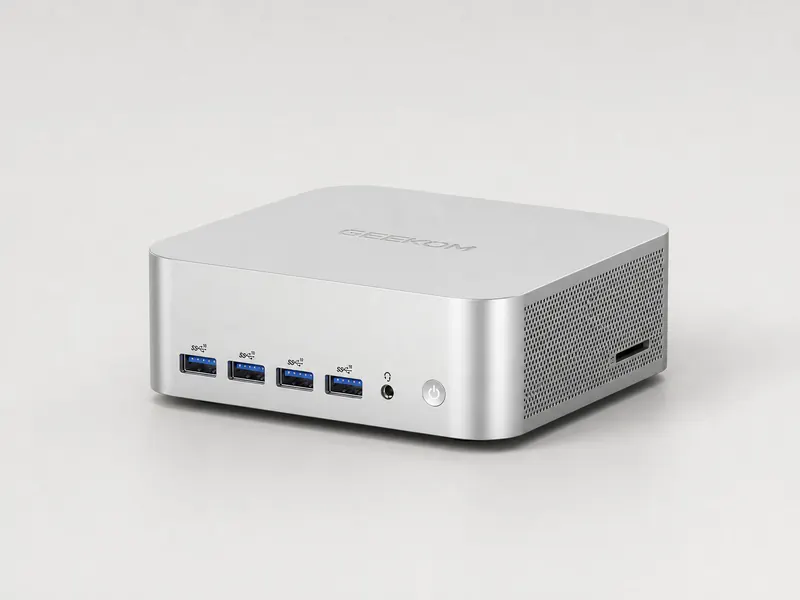
Geekom A9 Max
Ryzen AI 9 HX 370/470 mini PC sold as a general AI desktop, from $1,499.
Choose it if: You want the straightforward general desktop with room to grow into local AI.
Check pricefrom $1,499 →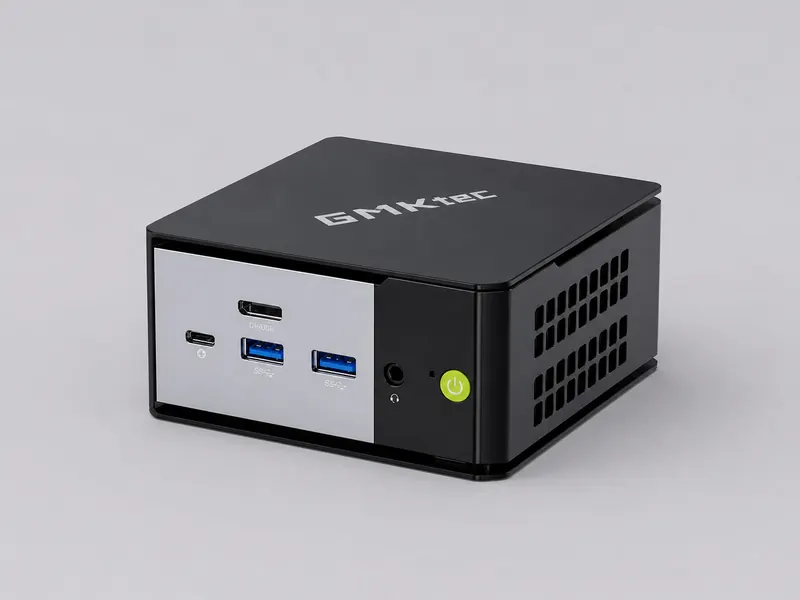
GMKtec EVO-X1
Ryzen AI 9 HX 370 mini PC at $1,149.99 with a native OCuLink connection.
Choose it if: You want the lower price or a native OCuLink connection for a planned eGPU.
Check price$1,149.99 →Short answer
Geekom A9 Max, from $1,499, is the general AI desktop we would buy instead of the $1,149.99 GMKtec EVO-X1. Choose Geekom A9 Max if you want a straightforward desktop with a choice of Ryzen AI 9 HX 370 or HX 470 chips and room to develop your local-AI workflow. Choose GMKtec EVO-X1 if the $1,149.99 price or its native OCuLink connection for a planned eGPU is a concrete advantage for your configuration.
Round by round
| Round | Geekom A9 Max | GMKtec EVO-X1 | Winner |
|---|---|---|---|
| Processor and NPU | Sold with Ryzen AI 9 HX 370 or HX 470 processors, per Geekom's listing. The HX 470 option is the newer generation of the two chips on this page. | Ryzen AI 9 HX 370, per GMKtec's listing. A fixed, single chip tier. | Geekom A9 Max |
| Local AI speed | No published benchmark against the EVO-X1. Speed depends on the exact chip, memory and power configuration, which Geekom sells in more than one tier. | No published benchmark against the A9 Max. Same chip family as the A9 Max's base option. | Tie |
| Price | From $1,499, per Geekom's store, checked 2 October 2026. The final price depends on the configuration chosen. | $1,149.99, per GMKtec's store, checked 2 October 2026. That is at least $349.01 less than the A9 Max's starting price. | GMKtec EVO-X1 |
| Expansion: OCuLink and eGPU | No native OCuLink connection listed on Geekom's A9 Max page. | Native OCuLink connection, which is the reason to shortlist the EVO-X1 if an external GPU is planned. | GMKtec EVO-X1 |
| General desktop use | The machine we would pick as the straightforward desktop: a choice of current Ryzen AI 9 chips and room to develop a local-AI workflow. | Fully capable as a desktop too, but its standout feature is the connector, not everyday desktop comfort. | Geekom A9 Max |
| Larger local models without an eGPU | A Ryzen AI 9 chip is not the answer for substantially larger models. Geekom's own step up is the A9 Mega at $3,799 with a Ryzen AI Max+ 395. | Same limit. The EVO-X1's OCuLink route to an eGPU is the workaround, but that is a different completed system at a different total price. | Tie |
| Configuration clarity | "From $1,499" pricing across two chip tiers means the buyer has to pin down the exact configuration before comparing value. | One listed price, $1,149.99, and one listed chip, the HX 370. Easier to compare like for like. | GMKtec EVO-X1 |
| Value for a planned eGPU build | No OCuLink, so an eGPU build means other attachment routes and a comparison of the completed setup, not the box price. | $1,149.99 plus a native OCuLink connection is the concrete advantage for a planned external GPU, as long as the completed setup is compared rather than the computer alone. | GMKtec EVO-X1 |
| Overall | 2 rounds | 4 rounds | Geekom A9 Max |
2 rounds tied.
Specs side by side
| Spec | Geekom A9 Max | GMKtec EVO-X1 |
|---|---|---|
| Processor | AMD Ryzen AI 9 HX 370 or HX 470 (listed) | AMD Ryzen AI 9 HX 370 (listed) |
| Price | from $1,499 | $1,149.99 |
| Native OCuLink | Not listed | Yes |
| Type | AI mini PC | AI mini PC |
| Step-up model for larger models | Geekom A9 Mega, $3,799, Ryzen AI Max+ 395 | None listed on this page |
Which is faster for local AI?
Neither Geekom A9 Max nor GMKtec EVO-X1 has a measured local-AI speed win on this page, because no benchmark has been run on both machines in the same configuration. That is a researched conclusion, not a hands-on result, and it is the honest one. Any site that names a winner here without saying which chip, which memory and which power setup it ran is comparing labels, not machines.
Here is what the listings say. Geekom sells the A9 Max with AMD Ryzen AI 9 HX 370 or Ryzen AI 9 HX 470 processors, per Geekom's store page, checked 2 October 2026. GMKtec sells the EVO-X1 with the Ryzen AI 9 HX 370, per GMKtec's product page, checked the same day. Those are manufacturer listings, not Testbench measurements. Neither listing we checked publishes a side-by-side inference figure against the other machine.
| Geekom A9 Max | GMKtec EVO-X1 | |
|---|---|---|
| Listed chip | Ryzen AI 9 HX 370 or HX 470 | Ryzen AI 9 HX 370 |
| Chip tiers | Two | One |
| Measured inference vs the other | None published | None published |
| Native OCuLink | Not listed | Yes |
| Price | from $1,499 | $1,149.99 |
Prices are US store prices checked 2 October 2026, without discount codes.
Match the generation before you match the machines. The first trap in this comparison is the chip name. The EVO-X1's HX 370 is the same chip as the A9 Max's base option, so an EVO-X1-versus-A9 Max speed argument is really an EVO-X1-versus-A9-Max-configuration argument. If the A9 Max in front of you carries the HX 470, you are comparing two different generations of silicon, and the newer chip should be expected to differ — but by how much, in local AI, neither listing tells you. Match the original EVO-X1 against the correct A9 Max processor generation before you conclude anything about speed.
The second trap is configuration. An HX 370-versus-HX 470 comparison can also hide different memory and power configurations, and Geekom sells the A9 Max in more than one tier. Local AI speed on a mini PC depends heavily on how much memory the model has to live in and how fast the machine is allowed to draw power. Two boxes with the same chip name can still differ in the memory they ship with and the power they are allowed to draw. Neither manufacturer's listing we checked publishes those figures in a form that lets us line them up here, so we do not line them up.
The third trap is the benchmark itself. Use the same model, the same context length and the same backend to compare actual inference. A tokens-per-second figure for one machine, run by one site with one model, does not transfer to the other machine's configuration. A model that fits comfortably in one machine's memory may spill out of another's, and the penalty for that is larger than any chip-generation gap. This page does not invent a benchmark result, and we have not run one. When a figure does appear on a review page, check which model it ran, at what context length, and on which backend before you treat it as comparable to anything.
What this means for a buyer. If you buy the EVO-X1, you are buying the HX 370 and one listed price, $1,149.99. If you buy the A9 Max, you are buying from $1,499 and up, and what you get between "from" and the checkout total is exactly the configuration question above. The practical reading of the listings is: the EVO-X1 is the simpler, cheaper, fixed machine; the A9 Max is the more flexible one whose speed you must pin down per configuration. Neither listing gives the buyer a measured reason to expect one to run the same model faster than the other.
If substantially larger models are the goal, neither machine is the answer. Both the A9 Max and the EVO-X1 use Ryzen AI 9 chips, and a Ryzen AI 9 chip is not the answer for substantially larger models without external graphics. Geekom's own step up is the Geekom A9 Mega at $3,799 with a Ryzen AI Max+ 395, per Geekom's store, checked 2 October 2026. That is a different class of machine at more than twice the EVO-X1's price, and it is the honest comparison point if model size, not desktop value, is what is driving the purchase. The EVO-X1's route to more graphics horsepower is different: its OCuLink connection and an external GPU, which is a different completed system at a different total price, and we come back to that in the next section.
The chip question is covered in more depth in the geekom a9 max review and the gmktec evo-x1 review. The brand-level comparison, including how Geekom and GMKtec differ across their whole ranges, is in geekom vs gmktec.
Which should you buy?
Buy the Geekom A9 Max if you want a straightforward general desktop with room to develop your local-AI workflow; buy the GMKtec EVO-X1 if its $1,149.99 price or its native OCuLink connection is a concrete advantage for your intended configuration. That is a researched verdict, not a hands-on one, and it keeps the verdict the page has always carried: the A9 Max is our pick as the general desktop, and the EVO-X1 deserves its place on the shortlist when the connector or the price matters.
| Requirement | Our choice |
|---|---|
| General AI desktop | Geekom A9 Max, from $1,499 |
| Native OCuLink for a planned eGPU | GMKtec EVO-X1, $1,149.99 |
| Lowest price | GMKtec EVO-X1, $1,149.99 |
| Choice of chip generation | Geekom A9 Max (HX 370 or HX 470) |
| Substantially larger models without an eGPU | Neither; consider Geekom A9 Mega, $3,799 |
The case for the Geekom A9 Max. It is sold with a choice of current Ryzen AI 9 chips, including the HX 470, the newer generation of the two chips on this page. It is the machine we would put on the desk for everyday work with local AI as a growing part of it, because the workflow can develop without the machine's standout feature being a connector. A general desktop is bought for the whole of its use — the browsing, the documents, the calls, the occasional model — and on the listings we checked, the A9 Max is the machine positioned and priced as that general desktop. The full assessment is the geekom a9 max review.
The case for the GMKtec EVO-X1. At $1,149.99 it is at least $349.01 below the A9 Max's from-$1,499 starting point, and its native OCuLink connection is the reason it stays on the shortlist when an external GPU is planned. If your intended configuration includes an eGPU, the EVO-X1 deserves its place. Those are two concrete advantages — a real dollar figure and a real connector — and they are why this comparison is not a walkover despite the A9 Max being our overall pick. The device on its own is in the gmktec evo-x1 review.
If an external GPU is involved, compare the completed setup, not the computer price in isolation. This is the single most important instruction on the page. An EVO-X1 at $1,149.99 plus an eGPU enclosure and a graphics card is a different total from an A9 Max at $1,499 and up with no external graphics, and the comparison only makes sense once both totals are on the table. The EVO-X1's OCuLink advantage is an advantage at the moment of buying the computer; whether it is still an advantage at the moment of running the model depends on the enclosure, the card and the completed system's bandwidth, and neither manufacturer's listing we checked publishes those figures for a completed build. A buyer who prices the EVO-X1 at $1,149.99 and stops there has not priced the machine they intend to own.
One caution on the A9 Max side. Its "from $1,499" pricing spans more than one chip tier. Pin down the exact configuration, its memory and its final price before you compare value against the EVO-X1's single listed $1,149.99. A from-price is a starting point, not the price of the machine you will receive. The gap between the two machines is "at least $349.01" for exactly this reason: the A9 Max's real checkout price depends on the tier chosen, and the HX 470 option will not be the from-price. If the configuration you actually want costs meaningfully more than $1,499, the value calculation against the EVO-X1 changes with it, and the $349.01 figure quoted here is the floor of the gap, not the gap.
One caution on the EVO-X1 side. Buying it for the connector only pays off if the eGPU build actually happens. If it never does, you have bought the cheaper machine with the same base chip as the A9 Max's entry tier, and the $349.01 you saved is the whole of the difference. That is not a bad outcome — saving $349.01 on the same chip is a perfectly good purchase — but it is a different purchase from the one the OCuLink argument was making. Be honest with yourself about whether the external GPU is a plan or an idea before you let the connector decide.
A rule for either machine. Whatever you buy, note the exact configuration on the invoice: chip, memory, and the price you actually paid. Every speed claim you read later — ours included — is only usable if you know which configuration it applied to. The two listings we checked give buyers different amounts of that information, and the A9 Max's two-tier range is the one that demands the most care.
The wider brand question, including how the two companies compare across their whole ranges and support, is in geekom vs gmktec. If model size rather than desktop value is what is driving the purchase, the step-up machines with the Ryzen AI Max+ 395 are the next pages to read.
Frequently asked questions
Is the Geekom A9 Max faster than the GMKtec EVO-X1?
There is no measured answer yet. Geekom lists the A9 Max with Ryzen AI 9 HX 370 or HX 470 chips and GMKtec lists the EVO-X1 with the HX 370, but no benchmark has run both machines in the same configuration, so any speed claim would depend on the exact chip, memory and power setup.
Which is cheaper, Geekom A9 Max or GMKtec EVO-X1?
The GMKtec EVO-X1 is cheaper, at $1,149.99 against the Geekom A9 Max's from-$1,499 starting price, a gap of at least $349.01. US prices checked 2 October 2026, without discount codes.
Does the GMKtec EVO-X1 have OCuLink?
Yes. The EVO-X1 has a native OCuLink connection, which is the main reason to shortlist it if you plan an external GPU. The Geekom A9 Max does not list one.
Should I buy a mini PC or step up to the Geekom A9 Mega for larger AI models?
If you need substantially larger local models without an external GPU, step up. Geekom's own answer is the A9 Mega at $3,799 with a Ryzen AI Max+ 395. Both the A9 Max and the EVO-X1 use Ryzen AI 9 chips.
Is this comparison based on hands-on testing?
No. It is a researched comparison built from the manufacturers' listings, checked 2 October 2026. No mini PC has been tested in a lab for this page, and no inference benchmark has been run on both machines.
Sources
- [1]Geekom A9 Max product page — From $1,499, Ryzen AI 9 HX 370/470 chip tiers. Checked 2 October 2026.
- [2]GMKtec EVO-X1 product page — $1,149.99, Ryzen AI 9 HX 370, native OCuLink. Checked 2 October 2026.
- [3]Geekom A9 Mega product page — $3,799, Ryzen AI Max+ 395, cited as the step-up for larger models. Checked 2 October 2026.